
Last updated November 15, 2026
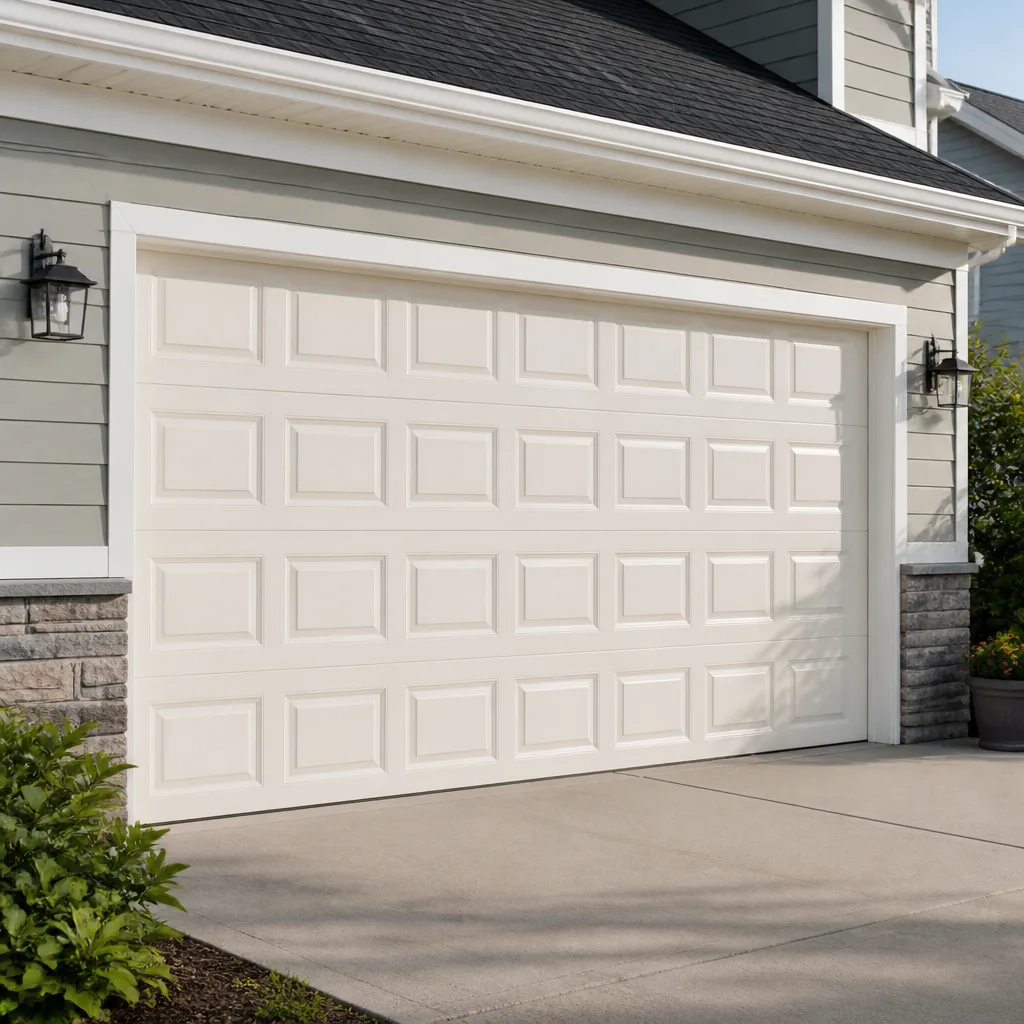 Raised-panel steel
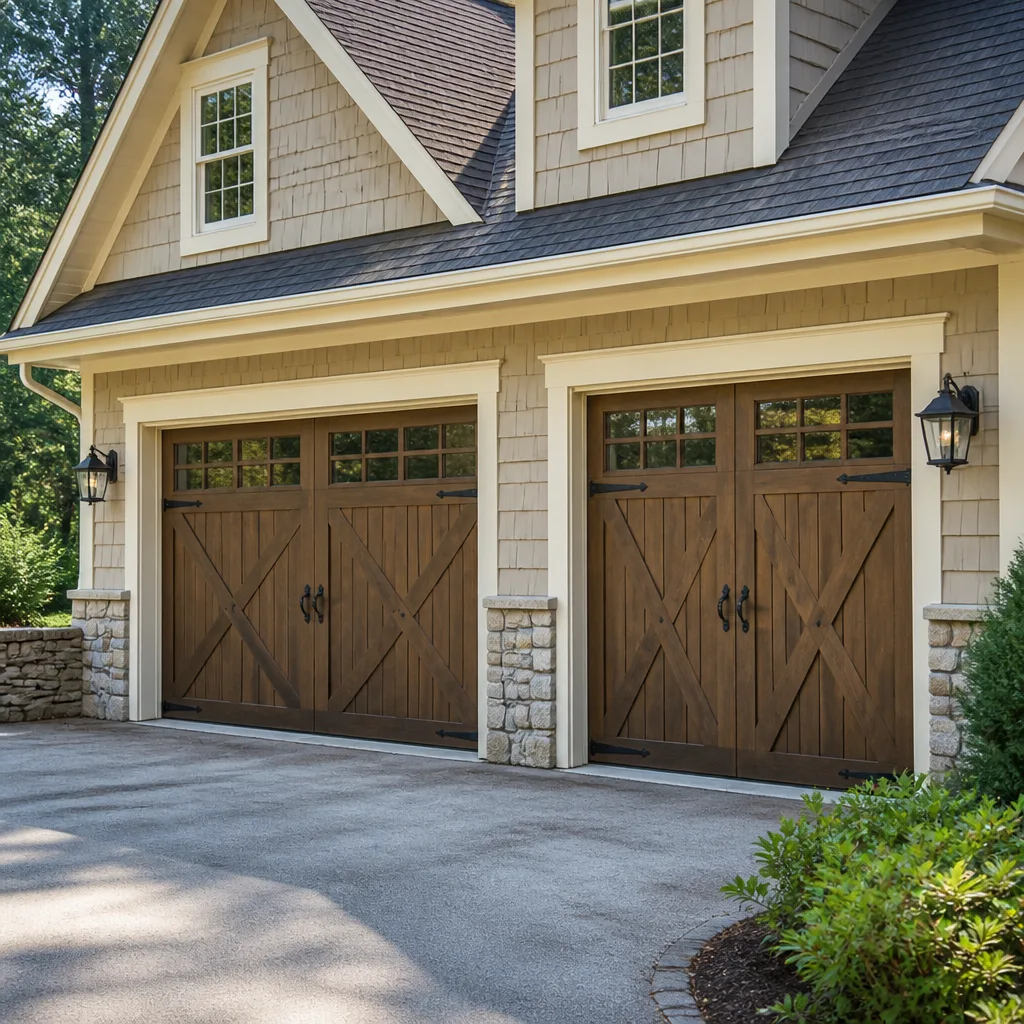 Carriage house
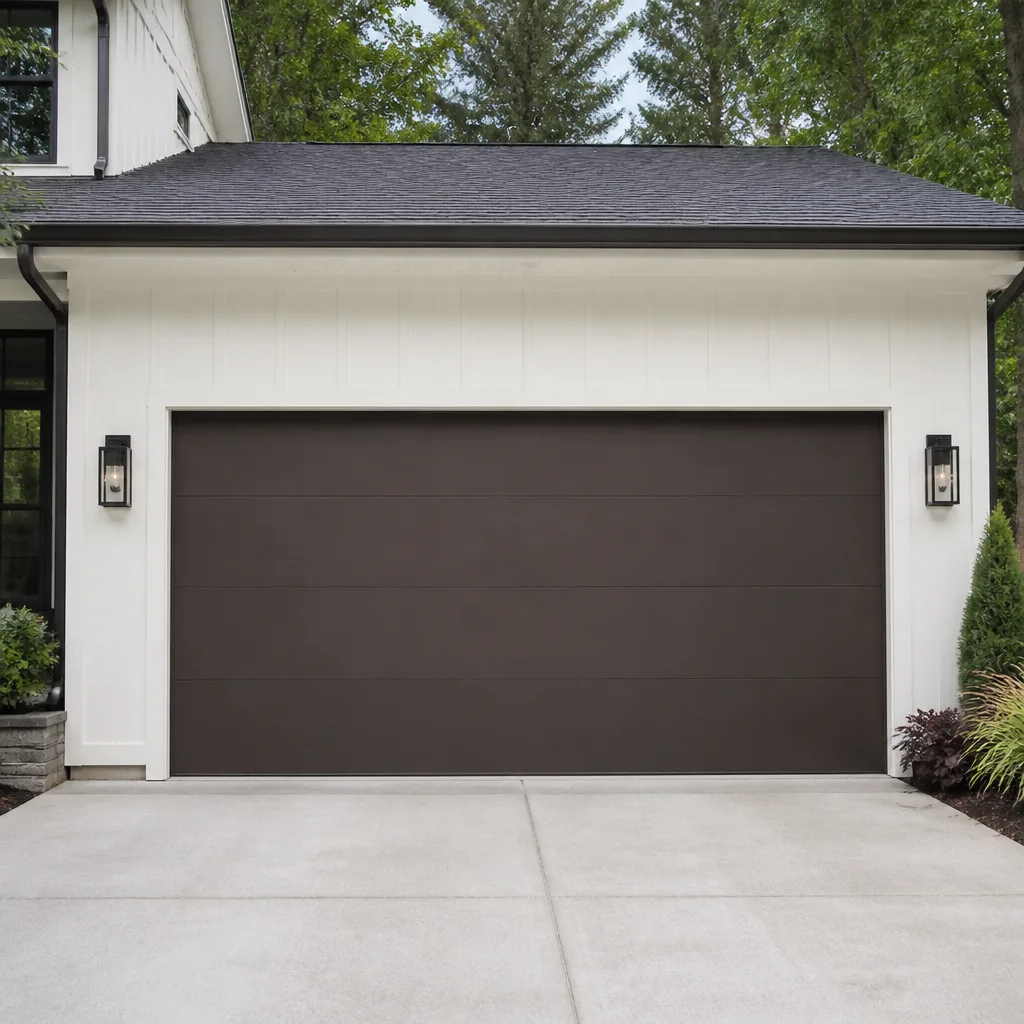 Modern flush
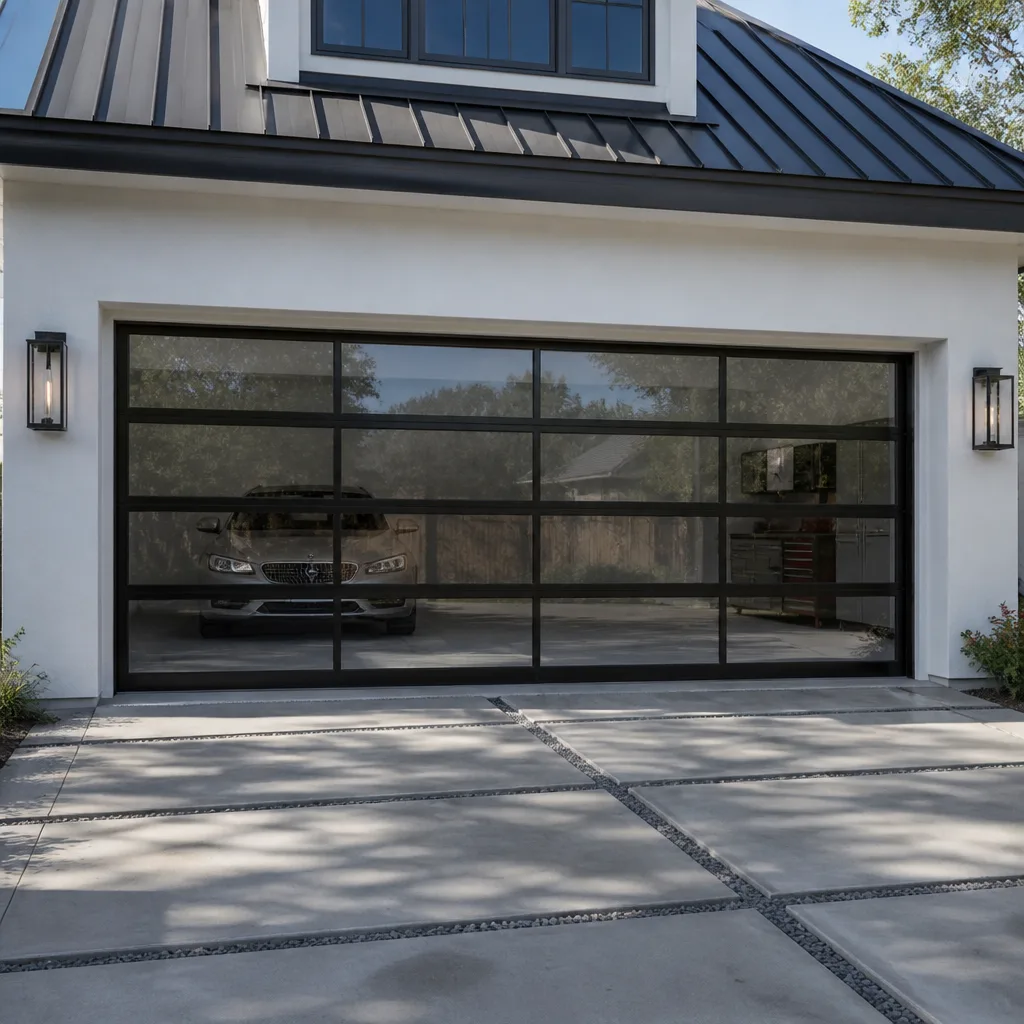 Full-view glass
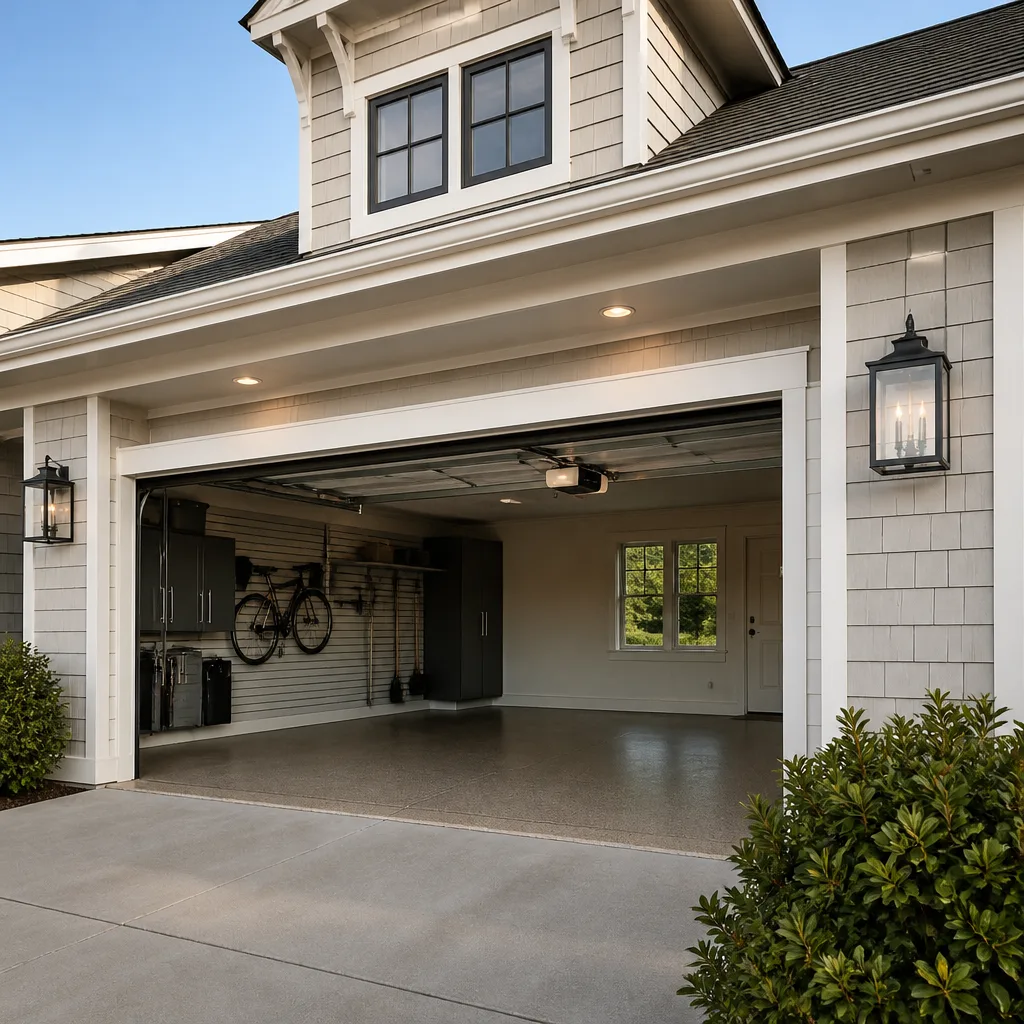 LiftMaster openers
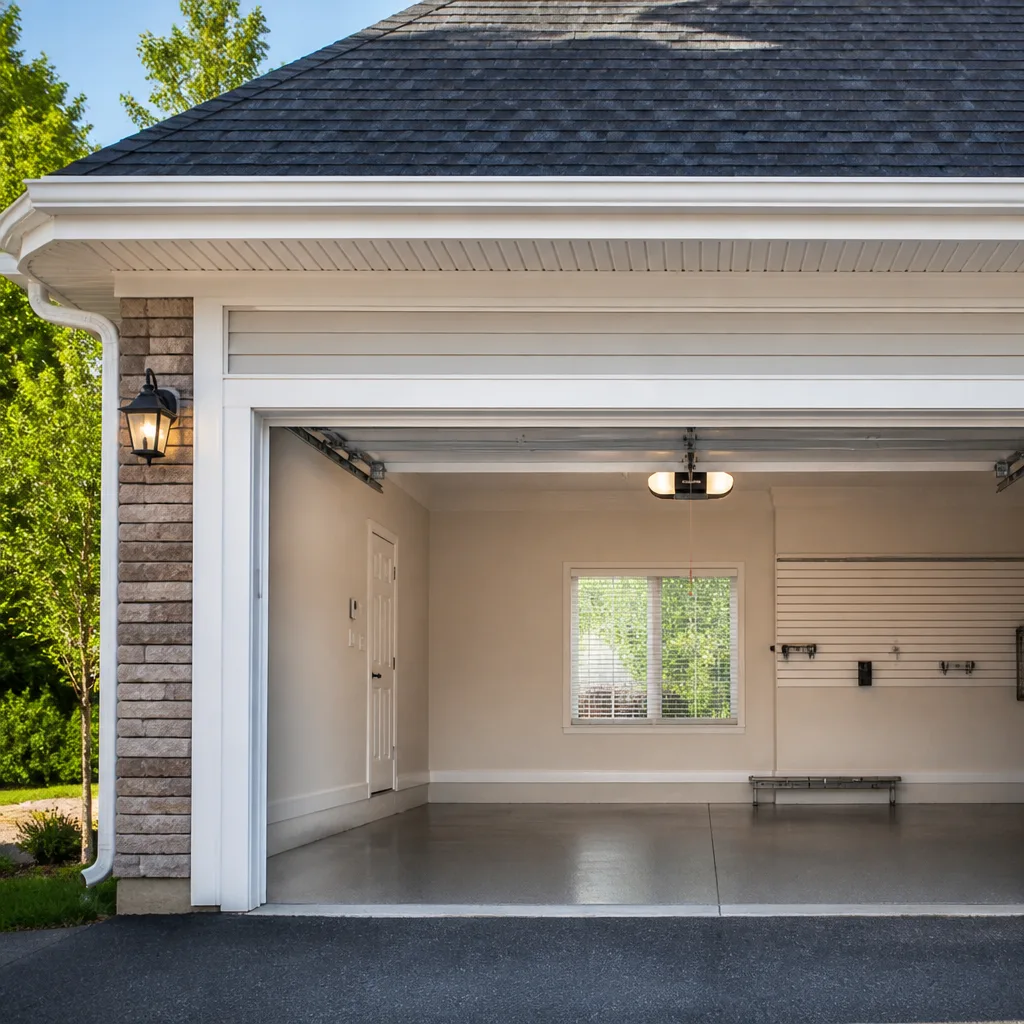 Chamberlain openers
Full 25-point door and opener safety check with every visit - springs, cables, rollers, tracks, and your LiftMaster or Chamberlain opener included
You get a price before we start. It does not change when the pro arrives.
Get your free estimateGarage Door Repair Troubleshooting in Lehigh Acres: Common Problems and How to Fix Them
A door that reverses the moment it nears the floor and a door that won’t budge at all look like two completely different failures. In Lehigh Acres, they’re often the same thing: a corroded or misaligned safety sensor circuit, made worse by humid air and ground that moves with the seasons. Most homeowners assume a dead door means a dead motor or a snapped spring, so they start guessing. Springs get blamed, openers get replaced, and the real fault sits untouched in a photo-eye bracket. This guide teaches you to read your door’s symptoms the way a specialist does: noise first, movement second, error codes third. By the end you’ll know which problems you can safely inspect yourself, which ones demand a trained hand, and how to describe the failure accurately when you call.
Quick Answer
Most garage door problems in Lehigh Acres come down to five causes: worn or corroded springs, tracks knocked out of plumb by seasonal ground movement, photo-eye sensors thrown off by dirt or shifting slabs, opener logic or remote faults, and cables that have stretched or frayed in the humidity. You can safely check the sensors, the tracks, the remote and the manual release yourself. Anything involving spring tension, cable drums or the torsion assembly belongs to a trained technician, every time.
Styles & brands we work with
- Raised-panel steel
- Carriage house
- Modern flush
- Full-view glass
- LiftMaster openers
- Chamberlain openers
Table of Contents
- How Garage Doors Fail Differently in Lehigh Acres
- The Diagnostic Sequence a Technician Actually Uses
- Spring Problems: The Failure You Should Never Touch
- Tracks Out of Plumb on Slab-on-Grade Homes
- Photo-Eye Failures and Rainy Season
- Opener and Remote Troubleshooting
- Cables, Rollers and the Hardware in Between
- What You Can Safely Check vs. What Needs a Pro
How Garage Doors Fail Differently in Lehigh Acres
Garage doors are built to a national standard, but they don’t fail to a national standard. The conditions around a door do most of the work of wearing it out, and the conditions in Southwest Florida are unusually hard on the moving parts. Humidity is the main culprit. Warm, moisture-heavy air settles into the gaps between coils on a torsion spring, into the strands of a lift cable, and into every hinge and roller bearing on the door. Steel that lives in that environment starts to oxidize faster than steel in a dry climate. The corrosion doesn’t announce itself. It works quietly, thinning the metal and changing how the parts move against each other, until one day the door travels unevenly or a spring gives way.
The second local factor is the ground itself. Much of Lehigh Acres is built on slab-on-grade foundations, and the sandy soil under those slabs shifts as wet season and dry season trade places. A slab can rise or settle by a small amount over a year, and a small amount is all it takes to pull a track bracket out of square. The door doesn’t need to be hit by anything. The floor under it simply changes its mind.
Here’s what that combination produces, in practical terms:
- Slow or labored travel that turns out to be a corroded roller or a dry hinge, not a failing motor.
- Uneven lifting, where one side of the door rises ahead of the other because a cable has stretched or a spring has lost tension.
- Doors that reverse for no obvious reason, usually a sensor fault that has nothing to do with the door’s balance.
- Grinding or popping sounds from a track that has drifted out of plumb against a shifted slab.
- Openers that strain because they’re fighting a door that no longer moves freely.
Notice the pattern: almost none of these failures start in the box on the ceiling. The opener is usually the messenger, not the cause. That’s why diagnosis comes first and parts come second, and it’s the reason a technician should always test the door by hand before touching the motor.
The Diagnostic Sequence a Technician Actually Uses
A trained technician follows a fixed order: noise first, movement second, error codes third. That order matters because it separates the symptom from the cause. A homeowner who starts with the opener’s error code often ends up replacing a working unit to solve a problem that lives in the track. Working in sequence, you rule out the cheap, common causes before you spend money on the expensive ones.
Here’s how the sequence runs:
- Listen before you touch anything. Stand inside the garage and have someone operate the door. A rhythmic squeak points at rollers or hinges. A sharp pop or bang points at a spring. A grinding rumble suggests a cable rubbing against a drum or a track.
- Disconnect the opener and move the door by hand. Pull the manual release so the door is disconnected from the motor. A balanced door should lift with steady, even effort and stay put when you let go halfway up. If it slams down, the springs aren’t carrying the weight. If it fights you on the way up, something is binding.
- Look at the door’s alignment. Check whether the door sits square in the opening and whether the gap on the left matches the gap on the right. A door that’s visibly crooked points to a cable or spring problem, not a sensor problem.
- Inspect the tracks and rollers. Look for dents, debris, or a track that has pulled away from the wall. Check that the rollers sit fully inside the channel.
- Test the safety sensors. With the door open, wave an object in front of the photo eyes. If the door doesn’t respond to the obstruction, or refuses to close at all, the sensor circuit is the fault.
- Read the opener’s error codes last. Modern openers from LiftMaster, Chamberlain, Genie and Craftsman use blinking lights or a display to report faults. The code tells you what the opener thinks is wrong, which is useful only after you’ve confirmed the door itself moves freely.
That sequence is the whole difference between diagnosis and part-swapping. Most DIY troubleshooting goes backward through it, starting with the part that’s easiest to reach.
Spring Problems: The Failure You Should Never Touch
Torsion springs carry the entire weight of the door, and they’re under constant tension. When one breaks, the door becomes dangerously heavy and the broken coil can whip free with enough force to cause serious injury. This is not a component to inspect up close, adjust, or attempt to replace yourself, no matter how handy you are with other household repairs. A trained technician uses the right winding bars and the right procedure, and that training exists for a reason.
What you can do is recognize the signs. A broken spring usually announces itself with a loud bang from the garage, after which the door won’t lift or lifts only with the help of the opener straining to drag it. Other failures are quieter. A spring that has weakened over time, which is common in humid climates where corrosion thins the coils, makes the door feel heavy on the manual release and forces the opener to work harder than it should. You might notice the door opening sluggishly or the motor sounding louder than it used to. Those are spring symptoms even though they feel like opener symptoms.
In our experience, humid air is the quiet accelerant. Moisture settles between the coils and speeds up the oxidation that eventually weakens the steel. Lehigh Acres homeowners who’ve had a spring fail often mention the door had been working but sounded “tired” for weeks beforehand. That’s the door telling you the spring is losing tension.
If you suspect a spring problem, stop operating the door. Call (844) 522-0595. We answer 24/7. A single spring replacement in Lehigh Acres typically runs $180 to $340, and a matched pair is replaced together, so a pair runs about twice that. The written estimate you receive before any work begins sets the final price. Our technicians have up to 15 years of experience with torsion assemblies, extension springs, and the high-lift and low-headroom configurations that come with different garage builds.
Tracks Out of Plumb on Slab-on-Grade Homes
Track alignment is one of the most misunderstood failures in this region. A garage door track looks like a rigid steel channel, and it is, but it’s only as rigid as the wall and floor it’s bolted to. On a slab-on-grade home, the floor and the wall can move independently as the soil beneath them shifts between wet and dry seasons. When that happens, a track that was perfectly plumb can drift a quarter inch out of square. A quarter inch is enough to make the rollers bind, the door climb unevenly, and the opener strain against a door that no longer wants to move in a straight line.
The symptoms of a misaligned track don’t always point to the track. Homeowners often describe:
- A door that rubs or squeals on one side.
- A gap that appears along one edge of the door when it’s fully closed.
- The door popping or jerking as it travels past a certain height.
- Rollers that wear out on one side faster than the other.
- The opener reversing for no reason, because the door’s resistance has tripped its force limit.
Those last two symptoms are the trap. A homeowner buys a new opener to solve a reversing door, and the reversal continues because the real fault is a track that’s half an inch out of plumb. That’s why we test the door’s movement before we look at the motor. In a Lehigh Acres home built on a shifting slab, “the opener is bad” is usually the wrong diagnosis.
A technician can correct minor track misalignment with adjustment and realignment, but a track that’s bent, dented or pulled away from the wall usually needs replacement. If the slab movement is significant and ongoing, we’ll tell you honestly what the limits of adjustment are. Sometimes the fix is straightforward adjustment; sometimes the door needs to be rehung. Either way, diagnosis comes first.
Photo-Eye Failures and Rainy Season
The photo eyes are the two small sensors mounted near the floor on either side of the door. They send an invisible beam across the opening, and if anything breaks that beam, the door refuses to close or reverses mid-travel. In Lehigh Acres, failures here spike during rainy season, and there are two very different causes: a dirty or fogged lens, and a genuinely failed sensor or wiring fault. Telling them apart saves you a service call or, conversely, saves you from trying to fix a dead sensor by wiping it down.
Here’s how to tell the difference in a safe, no-tools-move-nothing way:
- Look at the LED indicators on both sensors. Most units have a small light. A steady glow on both usually means the beam is intact; a flickering or dark light points to a blockage, misalignment or a dead unit.
- Check for physical obstruction. Look for debris, a buildup of dust, insect nests or standing water in the sensor’s line of sight. Rainy season brings all of these.
- Wipe the lens with a soft cloth. If the lens was fogged or dirty and the door closes normally afterward, the sensor is fine and you’ve solved it.
- Check alignment. Look along the sensor’s line of sight and see if the two units point at each other. A sensor that has been rotated slightly by ground shift can break the beam even though it looks fine from above.
- Look for wire damage. If a sensor is dead despite a clean lens and intact alignment, the wiring is the likely fault, and that needs a technician.
A door that reverses before it hits the floor and a door that won’t move at all can both trace back to the same corroded sensor wire on the same door. That’s the counterintuitive part most homeowners miss. Replacing the sensor is simple when that’s the fault, but replacing the sensor when the fault is a pinched wire doesn’t fix anything. And if you’ve already replaced a LiftMaster or Chamberlain opener to solve a door that wouldn’t close, the photo eyes are the first thing to recheck.
What you can’t do safely yourself is repair or relocate sensor wiring if it requires pulling the wiring from the opener head, and you shouldn’t try to bypass the sensors to make the door close. That defeats the safety system. Call (844) 522-0595 and we’ll send a technician to trace the circuit properly.
Opener and Remote Troubleshooting
When the opener is actually the problem, the symptoms look different from door faults. A door whose opener has failed typically behaves one of these ways:
- Nothing happens at all from the wall button or the remote.
- The remote works but the wall button doesn’t, or vice versa, which points to a specific component rather than the motor.
- The opener runs but the door doesn’t move, which suggests a broken spring or a disconnected carriage rather than an electrical fault.
- The opener hums but doesn’t travel, which can indicate a stripped gear or a failing motor capacitor.
- The door opens fine but won’t close, which almost always traces to a sensor problem, not the opener.
Start with the simple checks. Confirm the remote battery isn’t dead and that the wall button is actually receiving power. Look at the opener’s indicator light and, if it has a display or a blink code, note the pattern. Then check the safety reverse: place a small object in the door’s path and see if the door reverses when it contacts it. If it doesn’t, the opener’s force limits need adjustment or the opener itself has failed.
Modern openers add a layer that older ones don’t have. Smart-home systems from LiftMaster myQ, Chamberlain and Genie Aladdin Connect rely on Wi-Fi and a cloud connection, and a strong local signal can fail in ways that look mechanical. If your opener is paired to a smart-home app and stops responding to the app but still responds to the remote, the fault is in the network connection, not the motor. We service smart and legacy systems-radio-frequency openers and modern Wi-Fi units alike-whether the brand is LiftMaster, Chamberlain, Genie, Craftsman or another. If you need a hand tracing an opener fault, garage door opener repair walks through the service in more detail.
See the difference
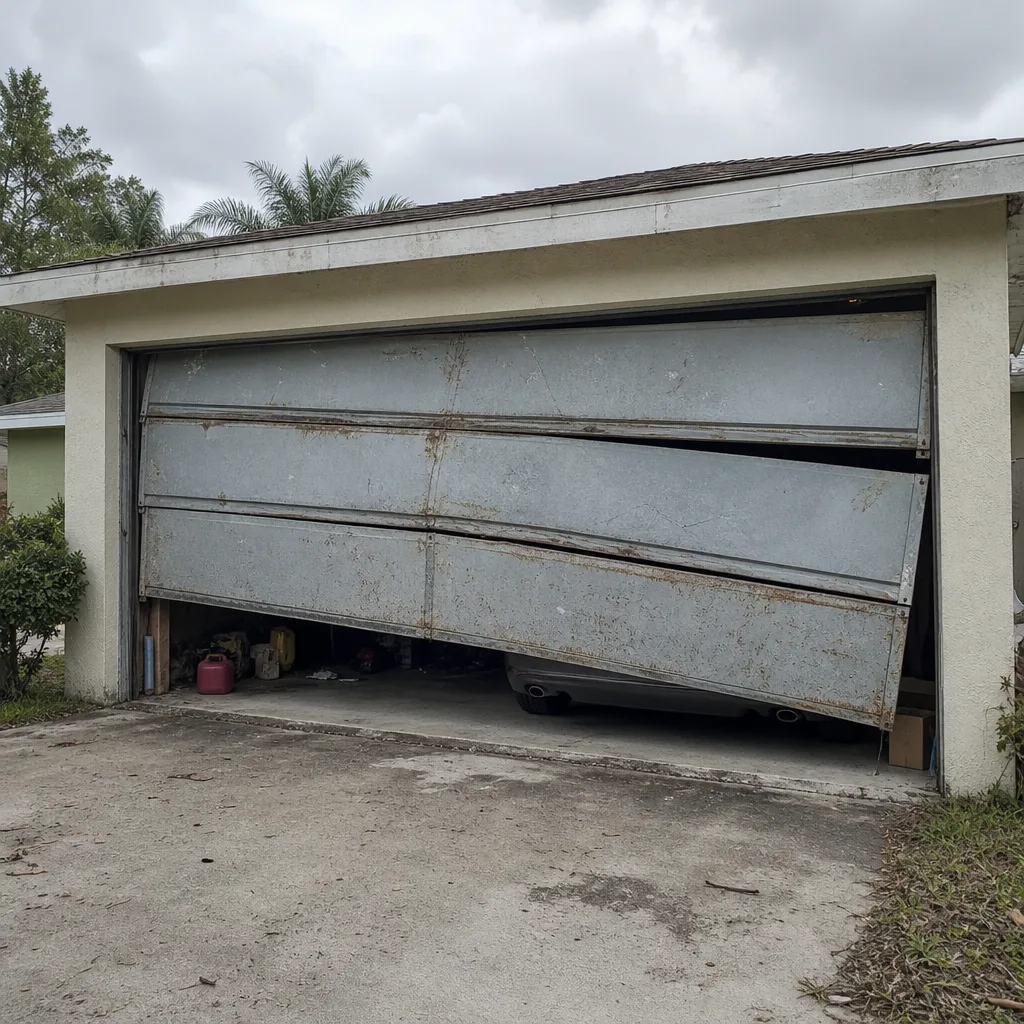 Before
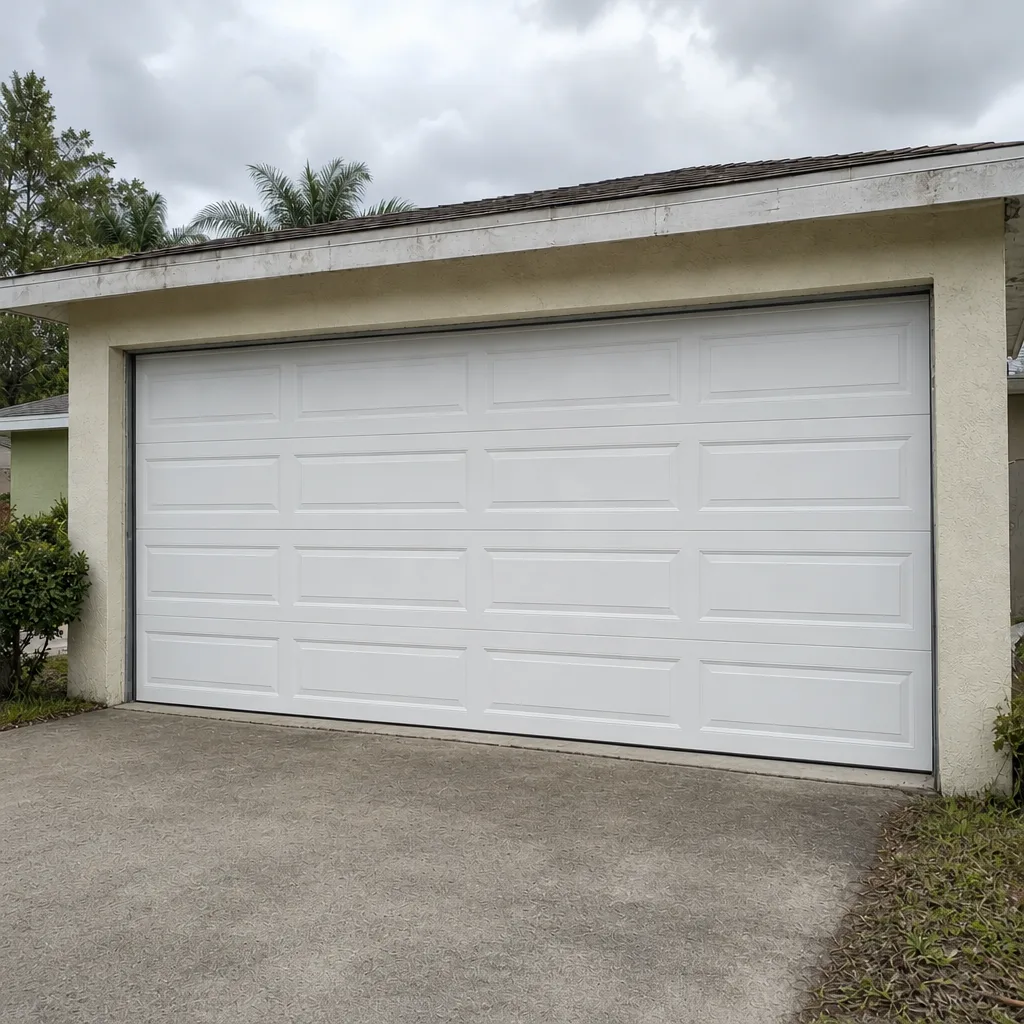 After
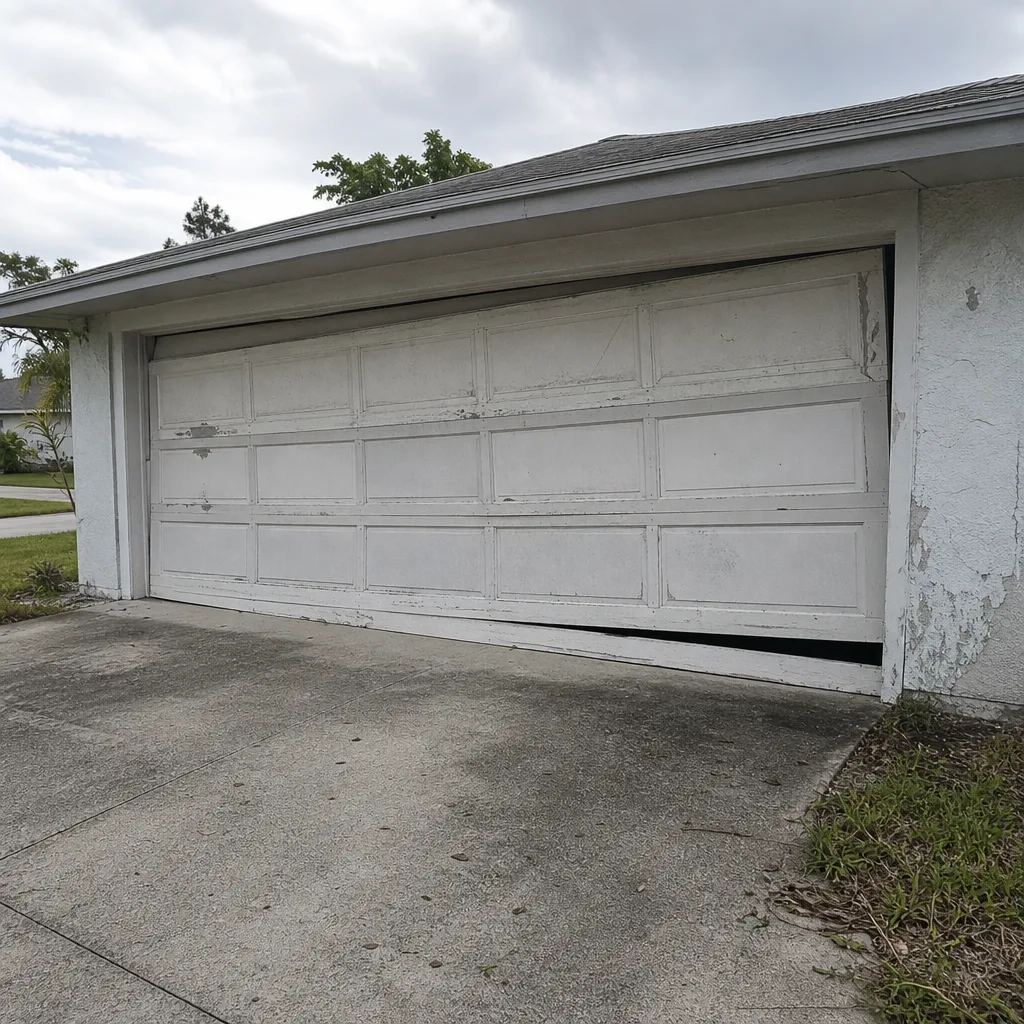 Before
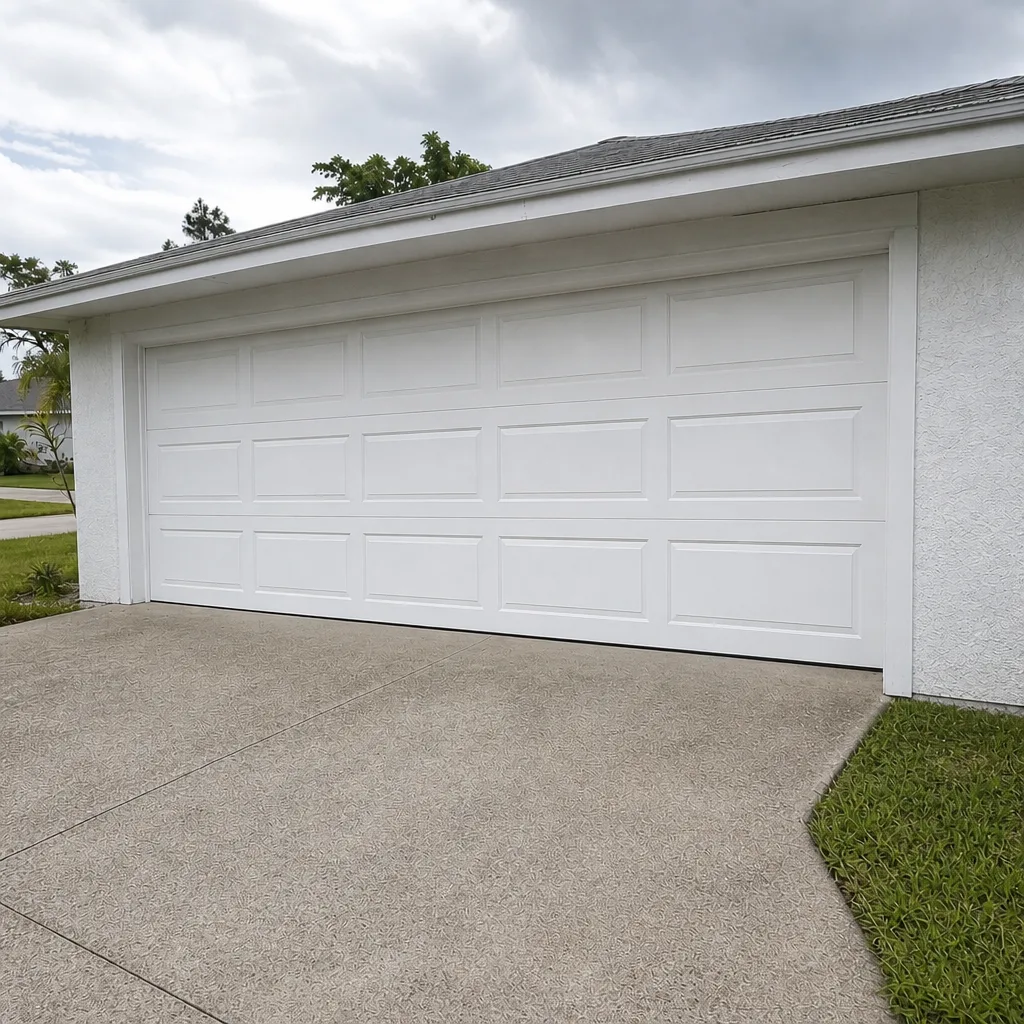 After
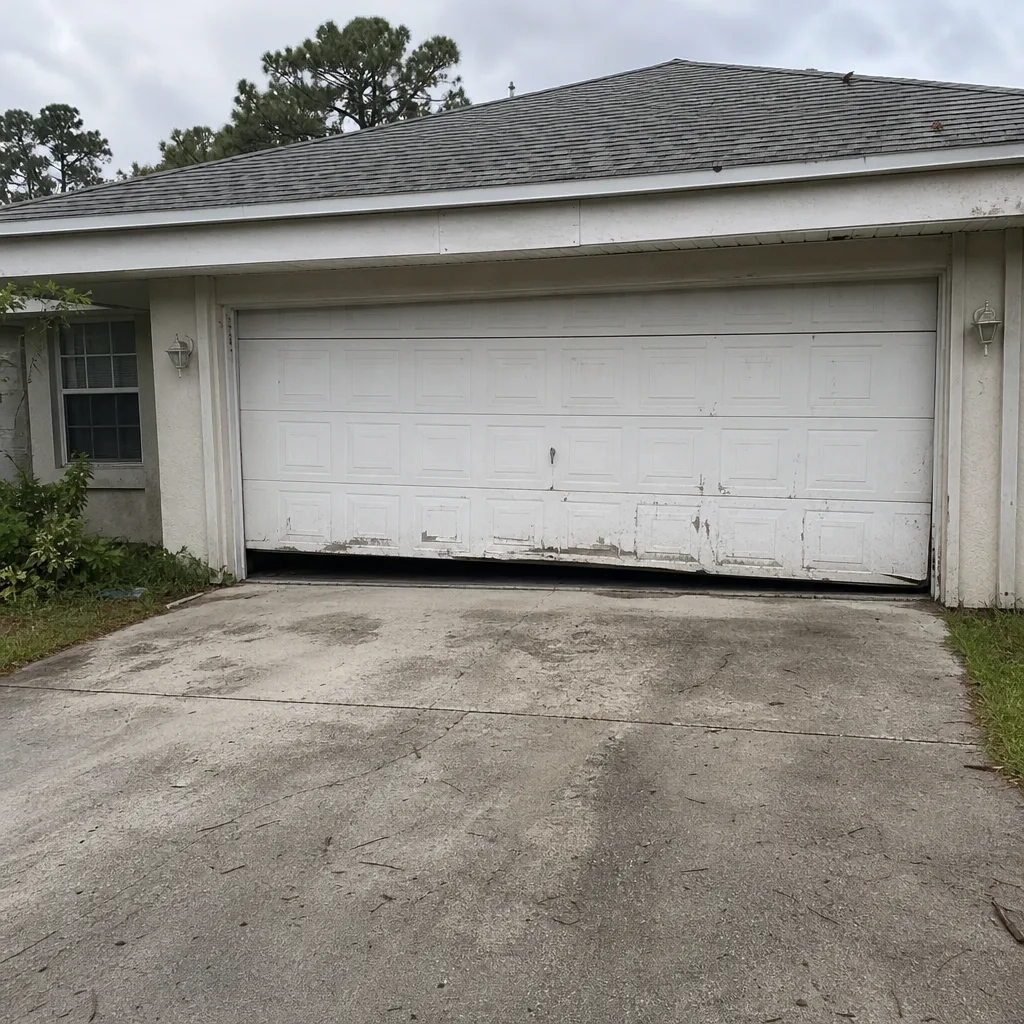 Before
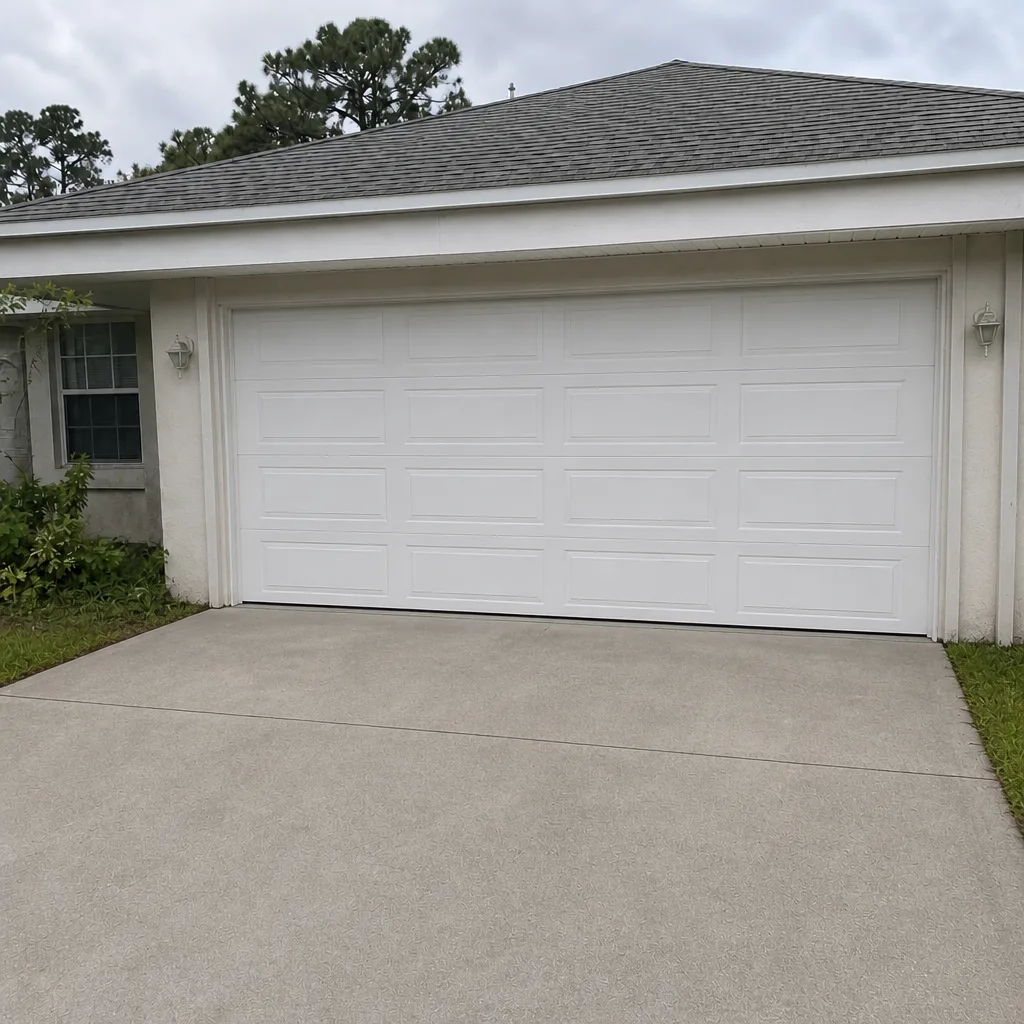 After
Cables, Rollers and the Hardware in Between
Cables, rollers and hinges are the parts of the system that quietly do most of the work. Cables lift the door; rollers guide it along the track; hinges hold the panel sections together. In a humid climate, all three wear faster than their national reputation suggests. Cables corrode from the inside out and stretch slightly over time. Rollers flatten or seize. Hinges dry out and begin to squeak. None of these failures is dramatic on its own, but stacked together they make the door heavy, noisy and hard to balance.
What you can check yourself, safely, with the door down and the opener disconnected:
- Rollers: look for flat spots, cracked nylon or seized bearings. Rollers should spin freely inside their brackets.
- Hinges: look for loose screws or visible cracks. A hinge that’s pulling out of the panel will eventually fail.
- Cables: look for fraying, rust or slack. If a cable is visibly frayed or has come off its drum, stop operating the door and call a technician. Cable tension belongs to the professionals.
Lehigh Acres door hardware often wears in a specific order: rollers first, then hinges, then cables, then springs. That order reflects the amount of movement each part sees and the exposure each one has to humid air. If your door has been noisy for a while and you’ve been living with it, you may be at the rollers-to-hinges stage. Replacing those small parts early usually prevents the higher-cost cable and spring work that follows. For the broader repair picture, see garage door repair.
What You Can Safely Check vs. What Needs a Pro
The line between “inspect this yourself” and “call a technician” is mostly about stored energy. Parts that hold stored force-springs, cables, drums-are where expert hands belong. Parts that don’t hold stored force, like sensors, rollers, tracks and remotes, are safe to look at with the door down and the opener disconnected.
| Component | Safe to inspect yourself? | What to look for |
|---|---|---|
| Photo-eye sensors | Yes | Clean lens, LED status, clear line of sight, visible wire damage |
| Rollers | Yes | Flat spots, cracks, sluggish spin |
| Hinges | Yes | Loose or cracked hinge plates |
| Tracks | Yes (look only) | Dents, debris, brackets pulling away from the wall |
| Remote and wall button | Yes | Battery, pairing, indicator lights |
| Opener force limits | Yes (adjust only) | Safety reverse test with an object in the path |
| Torsion springs | No | Visible gap or snapped coil; heavy door with the manual release pulled |
| Lift cables and drums | No | Fraying, rust, slack, cable off its drum |
| Center bearing and torsion shaft | No | Loud grinding, wobbling shaft |
If you can’t tell whether a problem falls on one side of that line, treat it as the other. A technician can run the full diagnostic sequence, test the door by hand, and read the opener’s codes without putting either of you at risk. That’s the difference between an inspection and a gamble. If you’d like a professional diagnosis, garage door repair in Lehigh Acres starts with an assessment rather than a parts list.
Common Mistakes to Avoid
- Replacing the opener to fix a door that won’t close. Nine times out of ten, the fault is the photo eyes or a wiring problem, and the new opener inherits the same fault. Test the sensors first.
- Bypassing the safety sensors to force the door closed. This defeats the one system designed to stop a closing door on a child or a pet. It’s unsafe, and it never solves the underlying problem.
- Assuming a broken-sounding door is a broken spring. A banging noise can be a loose hinge, a cracked roller or a track that’s shifted. Blindly replacing springs on a door that doesn’t need them wastes money and risks injury during the swap.
- Ignoring a slow, noisy door until it fails. In Lehigh Acres humidity, noise is the earliest sign that rollers, hinges or cables are wearing. Small maintenance now prevents cable and spring work later.
- Adjusting track brackets yourself to correct a crooked door. Track adjustment requires the door’s weight to be correct first, and a shift in one part of the system loads the other. A misadjusted track can drop the door.
- Believing the code on the opener display tells you what’s wrong. It tells you what the opener thinks is wrong. If the door itself doesn’t move freely, the code is a symptom, not a cause.
- Forgetting that a door sealed tight in humid air can’t breathe. Doors, panels and hardware in this climate benefit from hardware that’s allowed to move and dry. Over-tightening hinges or over-lubricating with the wrong product can make corrosion worse.
When to Call a Professional
Call a technician the moment a spring breaks or you hear a loud bang from the garage, when a door moves heavily on the manual release, when a cable is frayed or has come off its drum, or when the door has become visibly crooked in the opening. Those are the situations where stored energy makes the job too dangerous for a homeowner, regardless of experience. Call sooner rather than later if the door is noisy but still moving, since that early sign usually costs far less to fix than the failure it’s heading toward. And call if you’ve replaced a part already and the door still doesn’t work right; repeated part-swapping is usually a diagnosis problem, not a parts problem. Pilgrim Garage Door Repair offers free estimates in Lehigh Acres. Call (844) 522-0595. We answer 24/7. Fast dispatch from 7am to 7pm, Sunday through Friday. Our technicians have up to 15 years of experience, and we work on the door and opener that are already in your garage.
Frequently Asked Questions
It reverses because the safety sensor circuit has been interrupted, usually by a dirty lens, a misaligned sensor or a damaged sensor wire. Wet-season ground movement in Lehigh Acres frequently knocks photo eyes slightly out of alignment, and humid air can fog the lens. Start with a soft cloth wipe and a visual check of alignment before assuming the sensor has failed. If the door still reverses after those two steps, call (844) 522-0595 for a proper diagnosis.
Spring replacement in Lehigh Acres typically runs $180 to $340 for a single spring. A matched pair is almost always replaced together, so a pair runs about twice that, and the written estimate you receive before any work begins sets the final price. Our technicians have up to 15 years of experience with torsion and extension springs. Call (844) 522-0595 for an exact quote; estimates are free.
Same-day service is often possible for repair calls, so call and we’ll tell you what’s available. Our dispatch runs from 7am to 7pm, Sunday through Friday, and we’re closed on Saturday. We answer the phone 24/7, and a call outside dispatch hours is booked into the next opening. Call (844) 522-0595.
No, the price is quoted and agreed before any work starts. We diagnose the door, explain what we found, and give you a written estimate for the repair. The written estimate sets the final price, and you approve it before we begin. Call (844) 522-0595 for a free estimate.
A door that won’t move by hand but still opens under power usually has worn springs, stretched cables or binding rollers that the motor is overcoming. That strain shortens the opener’s life and points to a balance problem. Check the door on the manual release first; if it’s noticeably heavy, stop operating it and call (844) 522-0595.
Yes, our technicians are licensed and insured, and Pilgrim Garage Door Repair works only on garage doors and openers. We service all the major brands, from LiftMaster and Chamberlain to Genie, Craftsman and Raynor, so we’re diagnosing the system you have rather than steering you toward a new one. Call (844) 522-0595 to book an estimate; estimates are free.
The Bottom Line
A garage door that misbehaves in Lehigh Acres is usually telling you something specific. Corrosion, humidity and ground movement produce failures that look like opener problems but live in the springs, tracks and sensors. Read the symptoms in order: noise, then movement, then codes. Check what’s safe to check on your own. Leave spring tension and cable drums to a trained technician. And when the door stops moving cleanly, don’t start replacing parts until you know what’s actually broken. That’s the difference between solving the problem and paying for it twice. If you want a professional diagnosis, we’re here for the door that’s already in your garage. Call (844) 522-0595. We answer 24/7. Fast dispatch from 7am to 7pm, Sunday through Friday.
Written by the team at Pilgrim Garage Door Repair.