
Last updated November 15, 2026
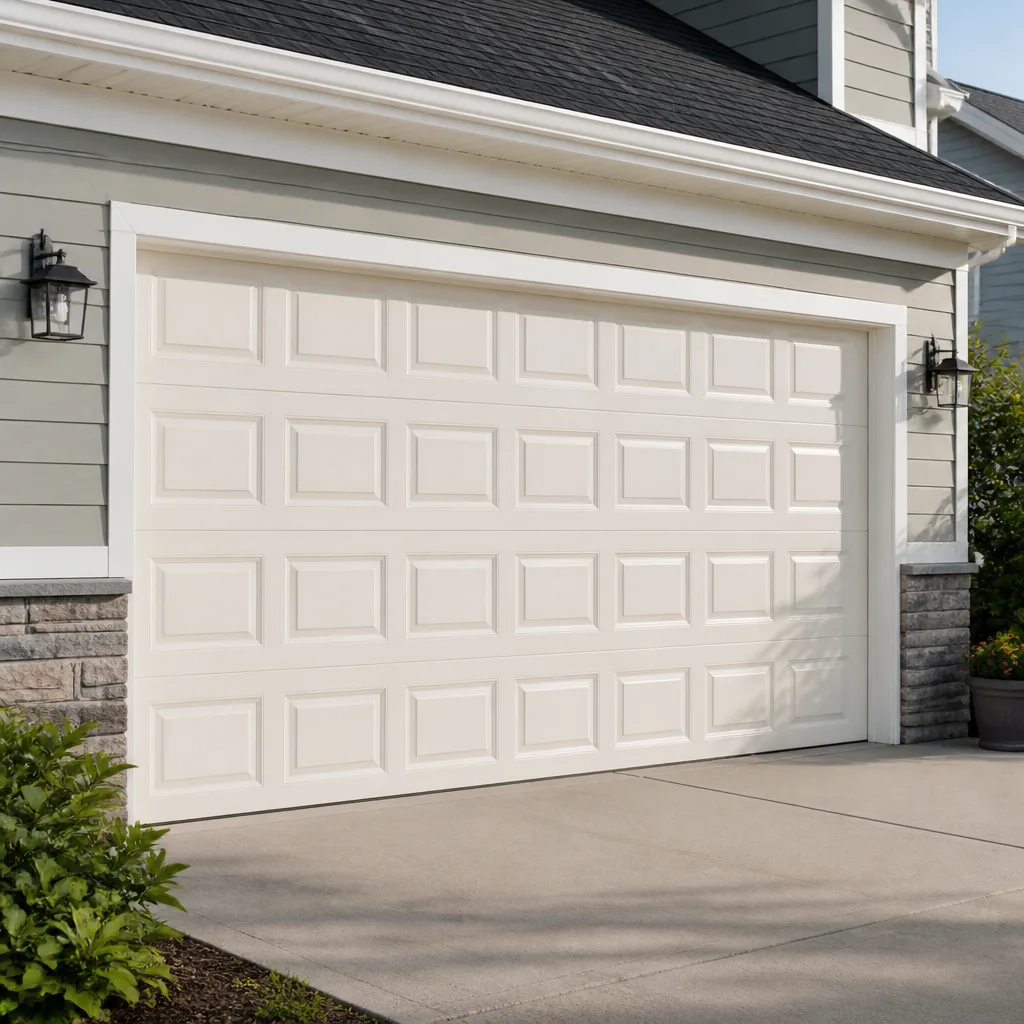 Raised-panel steel
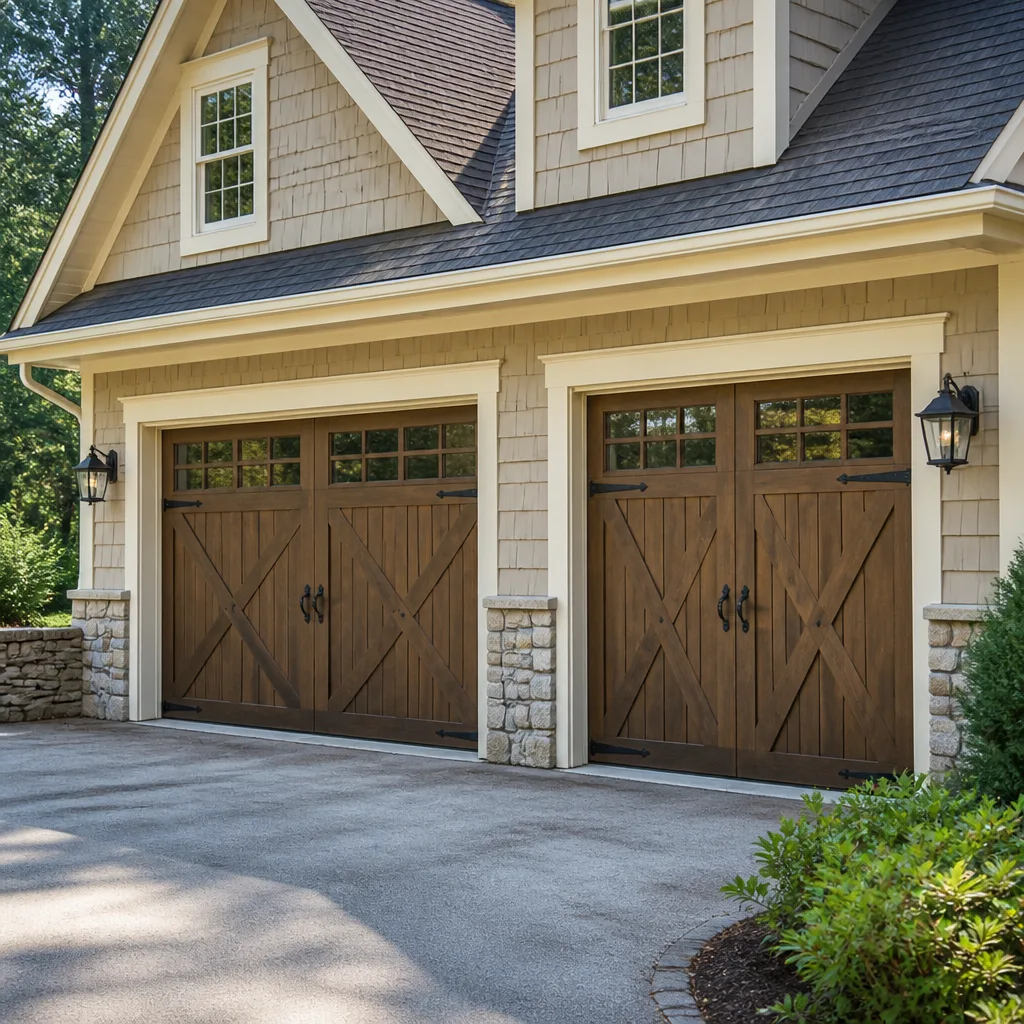 Carriage house
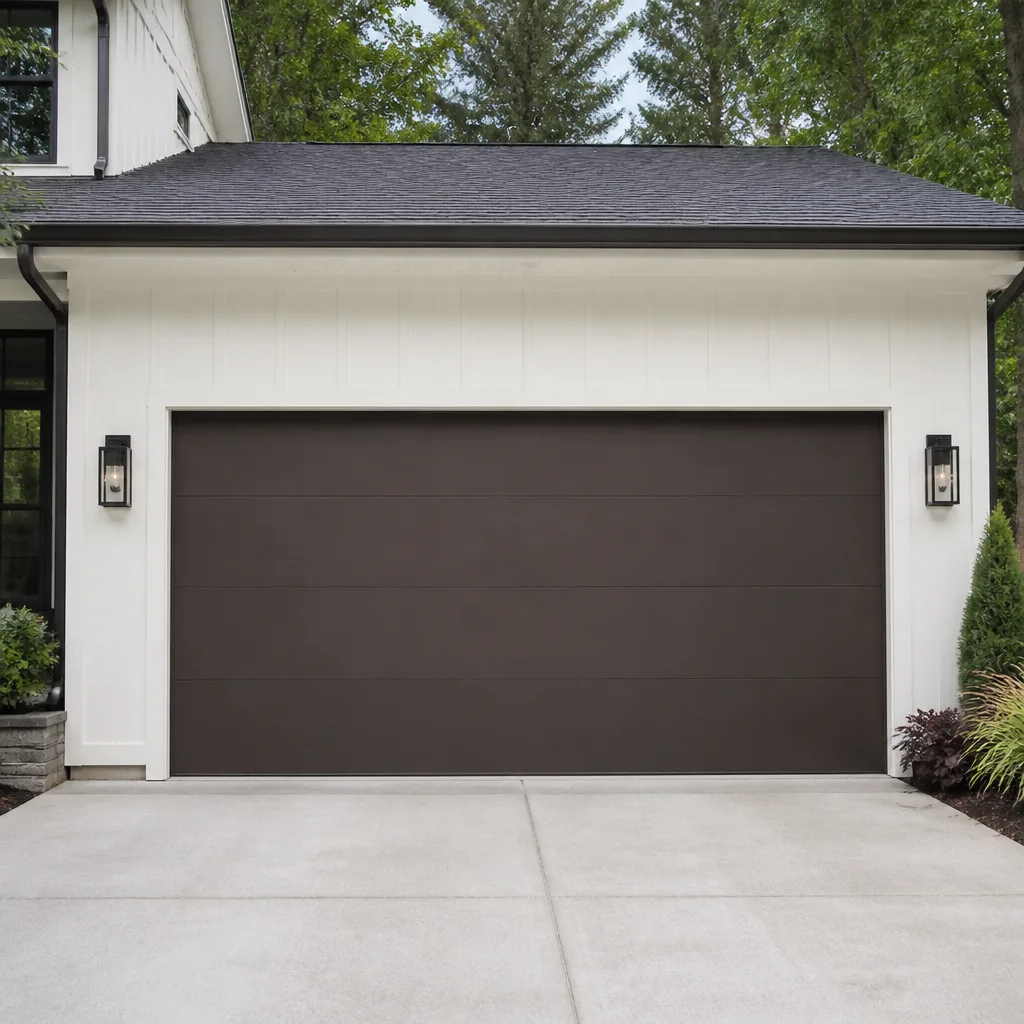 Modern flush
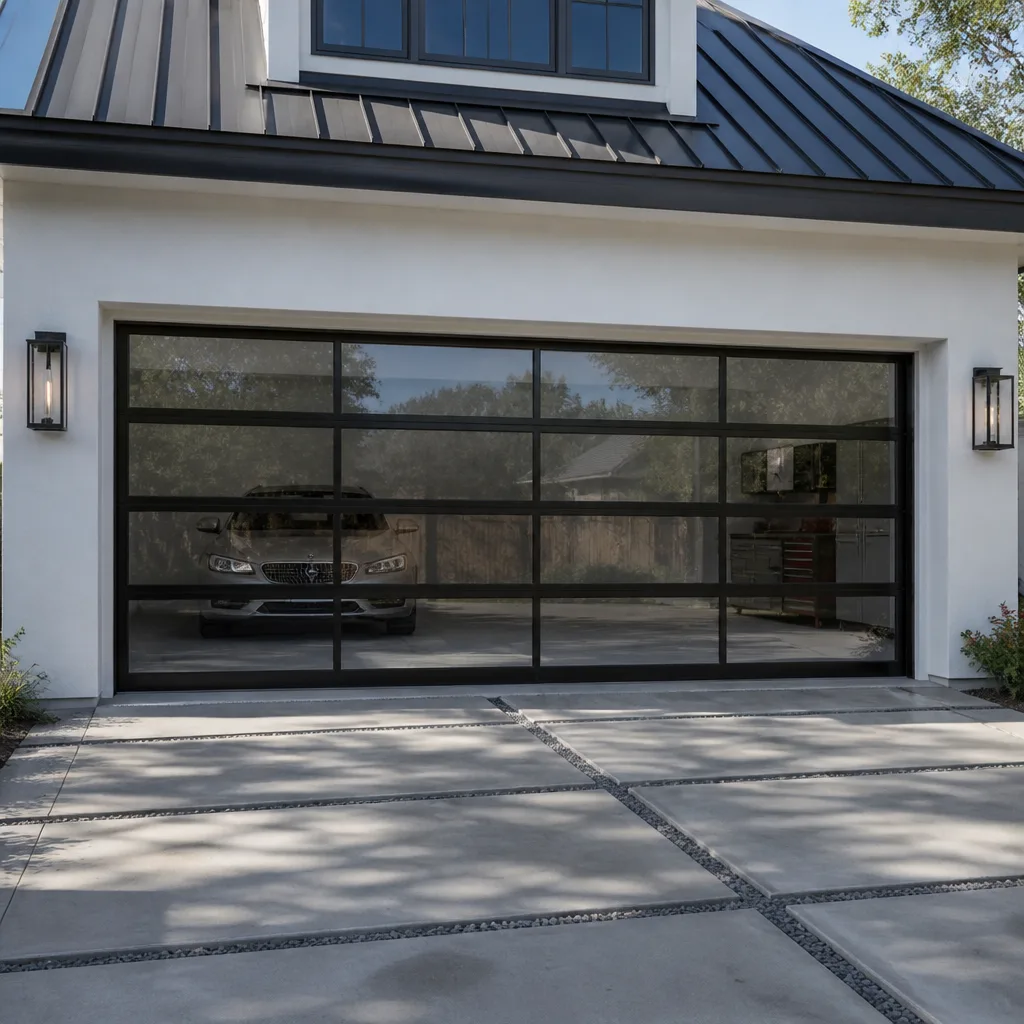 Full-view glass
 LiftMaster openers
 Chamberlain openers
Full 25-point door and opener safety check with every visit - springs, cables, rollers, tracks, and your LiftMaster or Chamberlain opener included
You get a price before we start. It does not change when the pro arrives.
Get your free estimateGarage Door Permits, Codes & Inspections in Lehigh Acres, FL: What You Need to Know
A garage door installed without the right wind-load rating in Florida isn’t just a code violation. It can put your homeowner’s insurance claim in jeopardy after a storm, and it can complicate a sale years down the road. That’s the part most contractors leave out of the conversation. Most homeowners in Lehigh Acres think of a permit as paperwork, a fee, a delay on a job they want done quickly. The permit is the smaller issue. The rating stamped on the door and the inspection that confirms it are what actually protect the house. This guide walks through what Florida’s building code requires for garage door replacements, when a permit is legally required, how to tell whether your contractor is pulling it, what inspectors in Lehigh Acres look for, and why impact-rated and wind-load-rated aren’t the same thing.
Quick Answer
In Lehigh Acres, replacing a garage door requires a building permit through Lee County, and the door must meet Florida Building Code wind-load requirements for the local wind speed zone. A permit is required for a full door replacement; routine repairs like springs, cables, and rollers generally don’t need one. The permit must be pulled in the property owner’s name, and the job needs to pass a final inspection before it’s considered complete.
Styles & brands we work with
- Raised-panel steel
- Carriage house
- Modern flush
- Full-view glass
- LiftMaster openers
- Chamberlain openers
Table of Contents
- Why garage door code matters more in Florida than most homeowners realize
- Florida’s wind-load requirements and how Lee County applies them
- When a permit is legally required in Lehigh Acres (and when it isn’t)
- What skipping a permit costs you at insurance and resale time
- How to verify your contractor is pulling the permit in your name
- The inspection process: what inspectors look at and why jobs fail
- Impact-rated vs. wind-load-rated: the distinction that confuses everyone
- Why the brand on your door matters for code compliance
Why garage door code matters more in Florida than most homeowners realize
Florida’s building code changed dramatically after Hurricane Andrew in 1992. The storm exposed how poorly many homes were built for wind, and the state responded with statewide requirements that had never existed before. The garage door became a focal point because it’s the largest opening on most homes. When a garage door fails in high wind, the pressure inside the house changes instantly, and that pressure has to escape somewhere. It usually escapes through the roof. That’s why the garage door isn’t treated as a cosmetic feature in Florida code. It’s treated as part of the building’s wind-resisting envelope, right alongside the windows and the roof sheathing.
Lehigh Acres adds its own wrinkle. Much of the housing stock here was built quickly during the 2000s boom, and a large share of it went up with builder-grade doors. Those doors met whatever code applied at the time of construction. What they don’t automatically do is meet the code that applies to a replacement today. When a homeowner in Lehigh Acres replaces a door that’s twenty years old, the new door has to satisfy current requirements, not the ones from when the house was built. That’s a genuine gap, and it catches people off guard.
The other piece is enforcement. Lee County runs its own permitting and inspection process, and garage door replacements go through it like any other structural alteration. The county tracks permits by address. Every permitted job leaves a record, and every unpermitted job leaves an absence that shows up eventually. This guide covers what that record means for you, the homeowner, and how to make sure it’s built correctly the first time.
Florida’s wind-load requirements and how Lee County applies them
Wind-load rating describes how much wind pressure a door can withstand before it fails. The Florida Building Code sets minimum wind speeds based on where a building sits, and those speeds translate into a required design pressure rating for the door itself. A door that meets the requirement will carry a label or documentation showing its rating, and that documentation is what the inspector wants to see.
Lee County applies these requirements to garage door replacements without much flexibility. The county’s building department reviews the permit application and the product documentation before issuing the permit. That means the door has to be selected and specified before the permit is approved, not after the install begins. In practice, this changes the order of a normal replacement job:
- The opening is measured precisely, including the headroom, the side room, and the jamb conditions.
- The replacement door is selected with a documented wind-load rating that meets the current code for that address.
- The permit application is filed, including the door’s product approval documentation.
- The county reviews and issues the permit.
- The door is ordered and installed.
- The job is inspected and signed off.
That sequence takes longer than an unpermitted swap, and there’s no shortcut around it. The county won’t accept a permit application with a door specification that doesn’t meet the requirement, and the inspector won’t sign off on a door that doesn’t match what the permit specified.
One detail worth knowing: the rating isn’t universal across every home in Lehigh Acres. Properties closer to open exposure and newer construction can face different requirements than older or more sheltered lots. The county’s building department is the authority on what applies to a specific address, and any contractor worth hiring will confirm the requirement for your parcel before quoting a door. When in doubt, ask the building department directly. They answer this question all day.
When a permit is legally required in Lehigh Acres (and when it isn’t)
The line isn’t complicated once you see it. A full door replacement changes the wind-resisting envelope of the house, so it requires a permit. Maintenance and repair of existing components usually doesn’t. The tricky part is that some jobs blur the line, and a contractor who’s eager to avoid the permit process may describe a replacement as a repair.
Here’s the practical breakdown:
- Requires a permit: full garage door replacement, new door installation on a new opening, changing the door size, changing the door type (for example, converting a solid door to one with windows), replacing the door and track system together, and any structural change to the opening.
- Generally no permit: replacing springs, cables, rollers, hinges, or weather seals; replacing the opener; adjusting track alignment; replacing a single damaged panel where the panel is the same rated product.
- Ask before assuming: replacing a door with a different model from the same manufacturer, or a panel swap that changes the door’s rated assembly. If the door’s rating documentation changes, call the county.
In Lehigh Acres, the panel question comes up often because builder-grade doors from the 2000s boom are now hitting the age where panels dent and rust. A single panel replacement may or may not affect the door’s rated assembly, depending on the product. Ask the county’s building department whether your specific situation needs a permit, and get the answer before work starts, not after.
Openers are simpler. Replacing a LiftMaster, Chamberlain, or Genie opener doesn’t change the door’s wind rating, so it usually doesn’t require a building permit. That said, a new opener and a new door installed together as one project should be permitted on the door side. Our garage door opener repair team handles opener work separately from door replacements for exactly this reason.
What skipping a permit costs you at insurance and resale time
An unpermitted garage door replacement doesn’t cause a problem on the day it’s installed. It causes problems later, in two places: an insurance claim after a storm, and a title or disclosure issue when you sell the house.
On the insurance side, the issue is documentation. After storm damage, an adjuster evaluates whether the damaged assembly met code when it was installed. If there’s no permit record and no product rating documentation, the claim can be denied or reduced. That’s the consequence most contractors don’t mention upfront: the door itself may have been fine, but the missing paperwork makes the claim contestable. Homeowners in Lehigh Acres who’ve been through a claims process know how much the paper trail matters.
On the resale side, Lee County keeps permit records by address. A buyer’s inspector will pull those records. An unpermitted door replacement shows up as a gap, and it typically gets resolved one of two ways: the seller pays for a retroactive permit and inspection, or the buyer negotiates the price down. Neither is cheap, and both take time. In a competitive market it can cost a sale.
There’s also a disclosure angle. Florida requires sellers to disclose known defects and unpermitted work in most transactions. A homeowner who didn’t know their contractor skipped the permit has a harder conversation ahead of them than one who has the permit in hand.
If you’re not sure whether a past replacement was permitted, you can check. Call Lee County’s building department with the property address and ask for the permit history on the garage door. If there’s no record, ask what the process is for getting one retroactively. It’s worth doing before a sale or a storm season, not after.
How to verify your contractor is pulling the permit in your name
The permit belongs to the property, but the application belongs to whoever pulls it. In Florida, that’s usually the licensed contractor, but the property owner should always be named on the application as the owner. There’s a specific reason this matters: if the contractor pulls the permit under a different name or under a shell entity, the permit may not protect you when the inspector signs off.
Here’s how to confirm your contractor is doing it right:
- Ask who will pull the permit and confirm the contractor’s license is active. Florida contractors carry a state license, and the license number should be on the permit application and the contract.
- Ask for the permit number once it’s issued. A legitimate contractor will have no trouble giving it to you within a day or two of filing. Write it down and keep it with your contract.
- Look up the permit yourself. Lee County’s online permitting portal lets you search by address or permit number. You should see your name as the property owner and the scope of work described accurately.
- Confirm the door specified on the permit matches what’s actually being installed. If the permit says one product and a different door shows up, the inspection will fail.
- Get the final inspection record when the job closes. A completed permit with a passed final inspection is the document you want in a file folder for your insurance company and any future buyer.
The failure mode to watch for is the contractor who says the permit “isn’t needed” for a job that clearly requires one. Sometimes that’s ignorance, sometimes it’s a way to keep the price low and the schedule short. Either way, the liability lands on the homeowner. In Lehigh Acres, where so much of the housing stock is now hitting replacement age, this conversation comes up more often than you’d think. If you want an independent read on your situation, our garage door repair technicians can tell you whether a job is a repair or a replacement before you sign anything.
Any contractor quoting a garage door replacement in Lehigh Acres should be able to explain the permit process without hesitation. If they can’t, that’s information.
The inspection process: what inspectors look at and why jobs fail
Garage door inspections in Lee County aren’t mysterious, but they’re specific. The inspector is confirming that the installed door matches the permit and meets the required rating. That means the inspection is really a documentation check plus a physical check, and both have to line up.
What inspectors typically look at:
- Product documentation and labeling. The door’s rating label or product approval paperwork must match the permit. If the label is missing or unreadable, that becomes a problem.
- Anchoring and fasteners. The door, track, and hardware must be fastened to the structure per the manufacturer’s installation instructions, with the correct fasteners for the substrate.
- Track alignment and reinforcement. On rated doors, the track and any reinforcement are part of the rated system. An inspector looks for correct alignment and correct reinforcement hardware.
- Clearances and headroom. The door must sit within the dimensions the manufacturer specified for the installed product.
- Weather sealing and the perimeter. Gaps around the opening that affect the wind seal are checked.
- The opener installation. If the opener was part of the permitted scope, its mounting and safety features are checked too.
Common reasons a Lehigh Acres garage door inspection fails:
- The installed door doesn’t match the door specified on the permit, usually because the contractor substituted a different model.
- The door’s rating documentation or label can’t be produced at the inspection.
- Fasteners are wrong for the substrate, especially on homes with block or stucco construction where the anchor pattern matters.
- Track reinforcement parts were left out because the installer wasn’t working to the rated assembly’s instructions.
- The permit shows a licensed contractor but an unlicensed sub performed the work, which shows up in the paper trail.
A failed inspection isn’t the end of the world, but it does halt the job. The permit stays open, the property record shows an incomplete job, and the contractor has to correct the issue and schedule a re-inspection. That’s the moment when the cheapest bid becomes the most expensive choice.
Impact-rated vs. wind-load-rated: the distinction that confuses everyone
These two terms get used interchangeably in conversation, and they aren’t. Wind-load rating describes how much pressure the door can withstand without failing structurally. Impact rating describes how the door performs when hit by a flying object during a storm. A door can meet wind-load requirements without being impact-rated, and this is where homeowners and sometimes contractors get confused.
For most garage door replacements in Lehigh Acres, the requirement is a wind-load rating that meets the current Florida Building Code for the address. That’s what the permit application and the inspection are checking. Impact-rated doors exist, and they provide additional protection against debris, but they aren’t universally required for all residential garage door replacements. Whether an impact-rated option is required or worth choosing depends on the specifics of your house, your insurer’s requirements, and the door’s role in the building’s overall protection.
Here’s what to ask before signing a contract:
- What wind-load rating does the code require for my address?
- Does the specific door you’re quoting meet that rating, and where is the documentation?
- Is the door impact-rated, and if the answer is yes, is that required or an upgrade?
- Will the rating documentation be available at the inspection?
The homeowner’s insurance company is a useful second opinion here. Some carriers offer credits or have specific requirements for garage doors on homes they insure. Ask your agent what they look for, and make sure your contractor’s quote is compatible. A door that satisfies the county’s code requirement but doesn’t match what your insurer expects leaves you sorting out the difference later.
In our experience, the confusion is usually about which requirement applies, not whether any requirement exists. Get that answered at the front of the job, not the back.
Why the brand on your door matters for code compliance
Not all garage door manufacturers handle the documentation side the same way, and that affects the permit process. A door needs product approval documentation that the county can review, and manufacturers differ in how easy that is to produce. When we quote a replacement, the door brand matters for three reasons: the availability of the rating documentation, the reliability of the manufacturer’s installation instructions, and how readily replacement parts can be sourced if one is ever needed.
The brands we work with most often in Lehigh Acres include Clopay and Amarr among the door manufacturers, and LiftMaster and Chamberlain among the opener manufacturers. Each of these has a track record of providing the documentation inspectors need, and each has a parts and service network that makes future repairs simpler. That’s not a preference for one over another. It’s that a job with clean paperwork tends to go more smoothly than one without, and the manufacturer side of the paperwork is part of the job.
What matters more than brand is the specific product’s rating documentation. A door from a well-known manufacturer still has to be the right model with the right rating. A contractor who quotes a premium door without confirming its rating against your address is skipping a step. The rating, not the name on the door, is what satisfies the code requirement.
Our Pilgrim Garage Door Repair technicians work with whatever brand is already on the house, from builder-grade doors to architectural models, and we treat the permit and inspection as part of the job, not an afterthought. If you’re comparing quotes and one doesn’t mention the permit or the rating documentation, that’s the quote to question.
Common Mistakes to Avoid
- Accepting “no permit needed” for a full replacement. A full garage door replacement in Lehigh Acres requires a permit. If a contractor tells you otherwise, ask them to put that in writing and then call Lee County’s building department to confirm.
- Letting the contractor pull the permit under a different name. The permit should list you as the property owner and the licensed contractor as the applicant. If neither name is right, the permit may not protect you at resale or at claim time.
- Ordering the door before confirming the required rating. The door has to be specified before the permit is filed. A door ordered first and documented later can end up as the wrong product for the inspection.
- Confusing impact-rated with wind-load-rated. Wind-load rating is the code requirement. Impact rating is a separate characteristic. Unless you’ve confirmed your insurer or the county requires impact rating, don’t assume a door that has one is what your address specifically requires, and don’t assume a wind-load-rated door without it is automatically non-compliant.
- Skipping the final inspection. A permit without a passed final inspection is an open permit. An open permit shows up on a title search and has to be resolved before a sale. Insist on the final inspection record.
- Replacing a single panel without checking whether the door’s rated assembly changes. Panel replacement is usually a repair, but if it changes the door’s rating documentation, the county may want a permit. A quick call to the building department settles it.
- Not keeping the paperwork. Permit number, product documentation, and the final inspection record belong in a file with your home’s other records. Your insurance company will want them if you ever file a storm claim.
See the difference
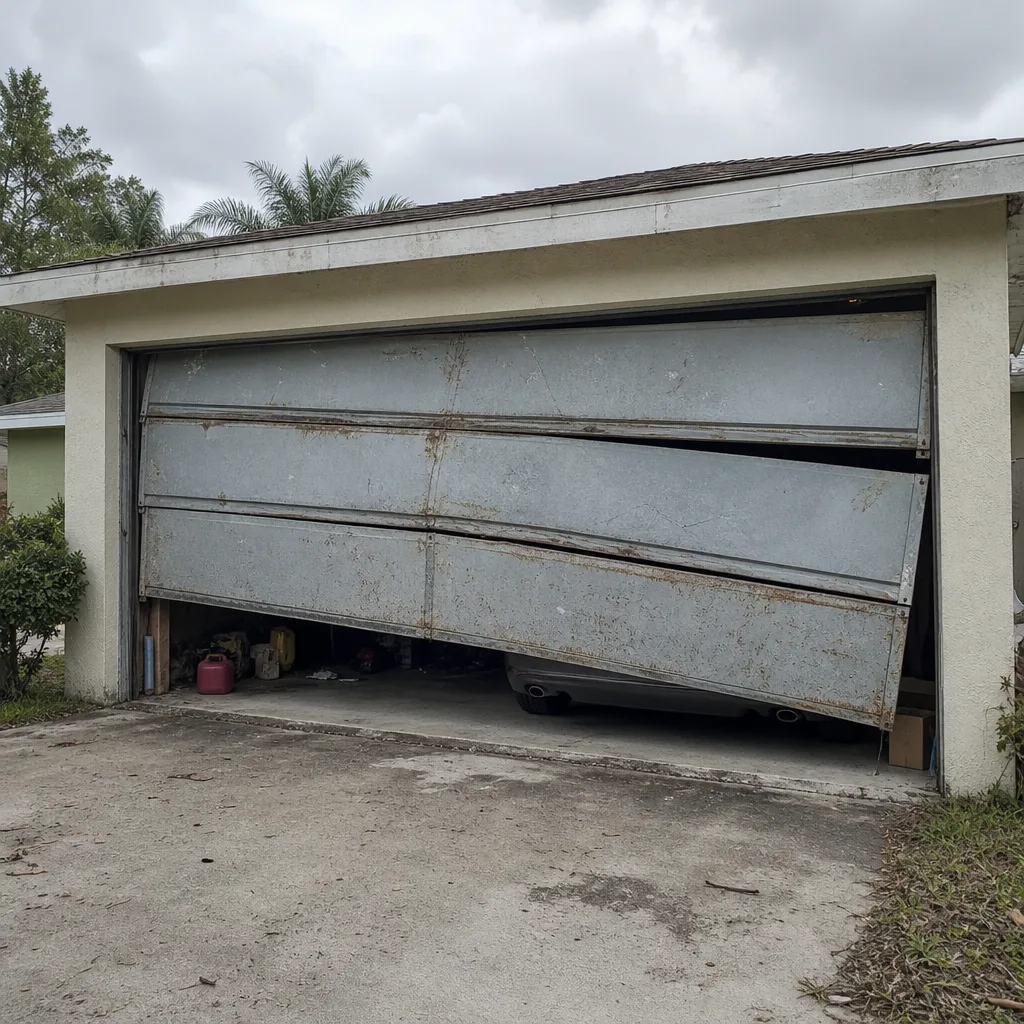 Before
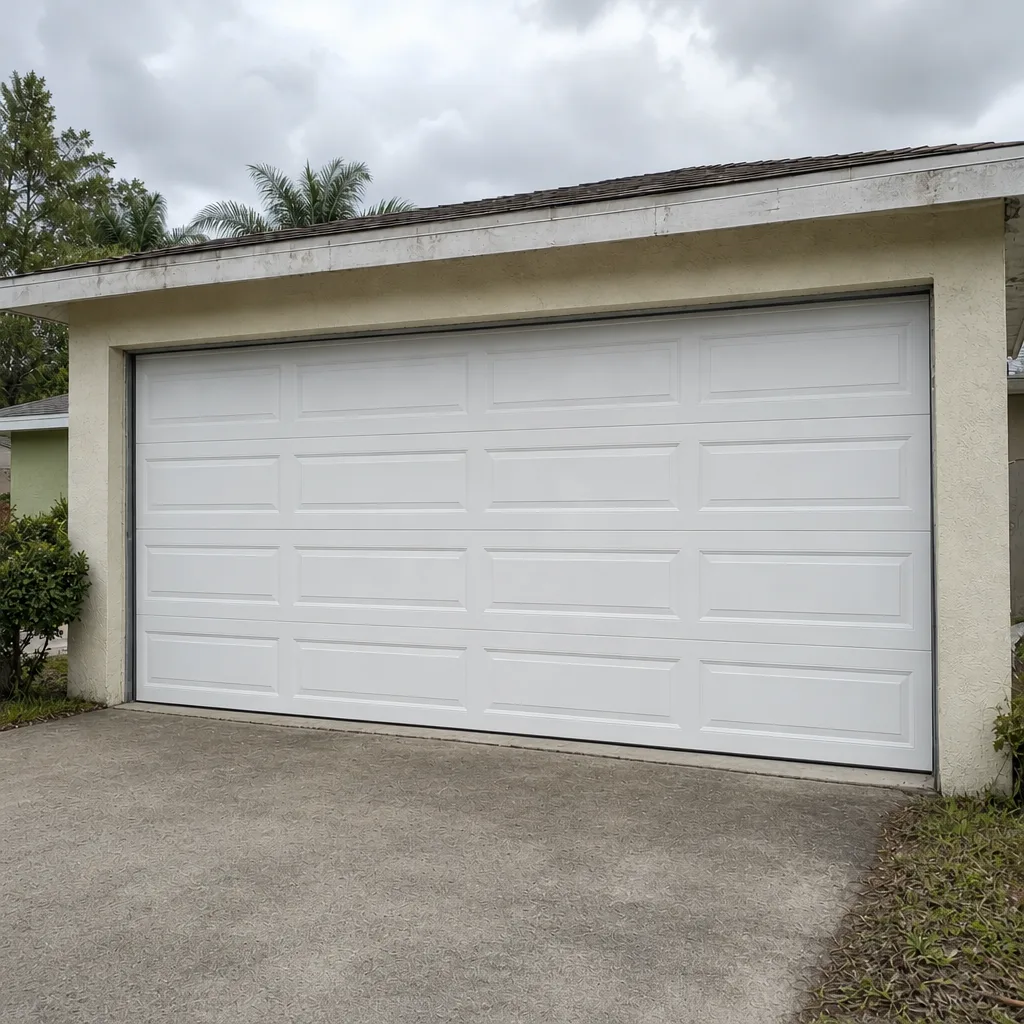 After
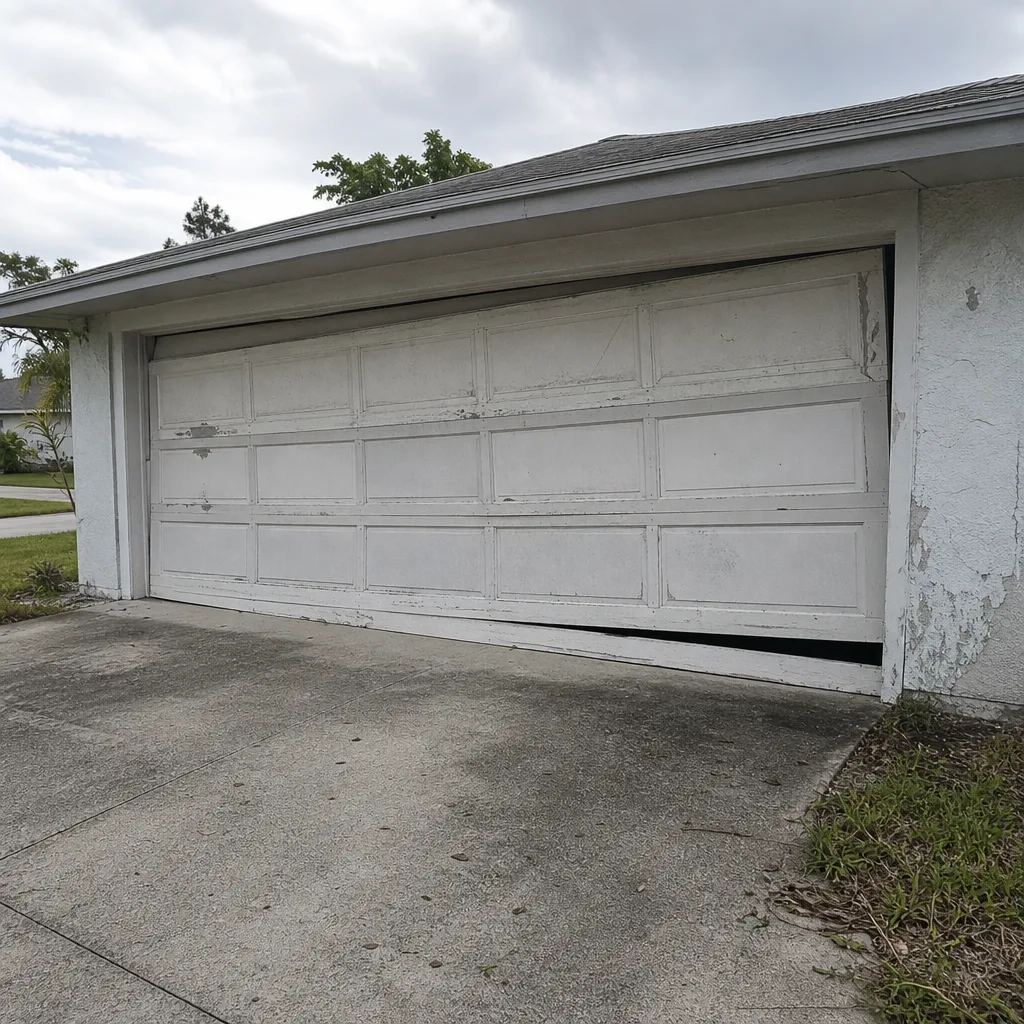 Before
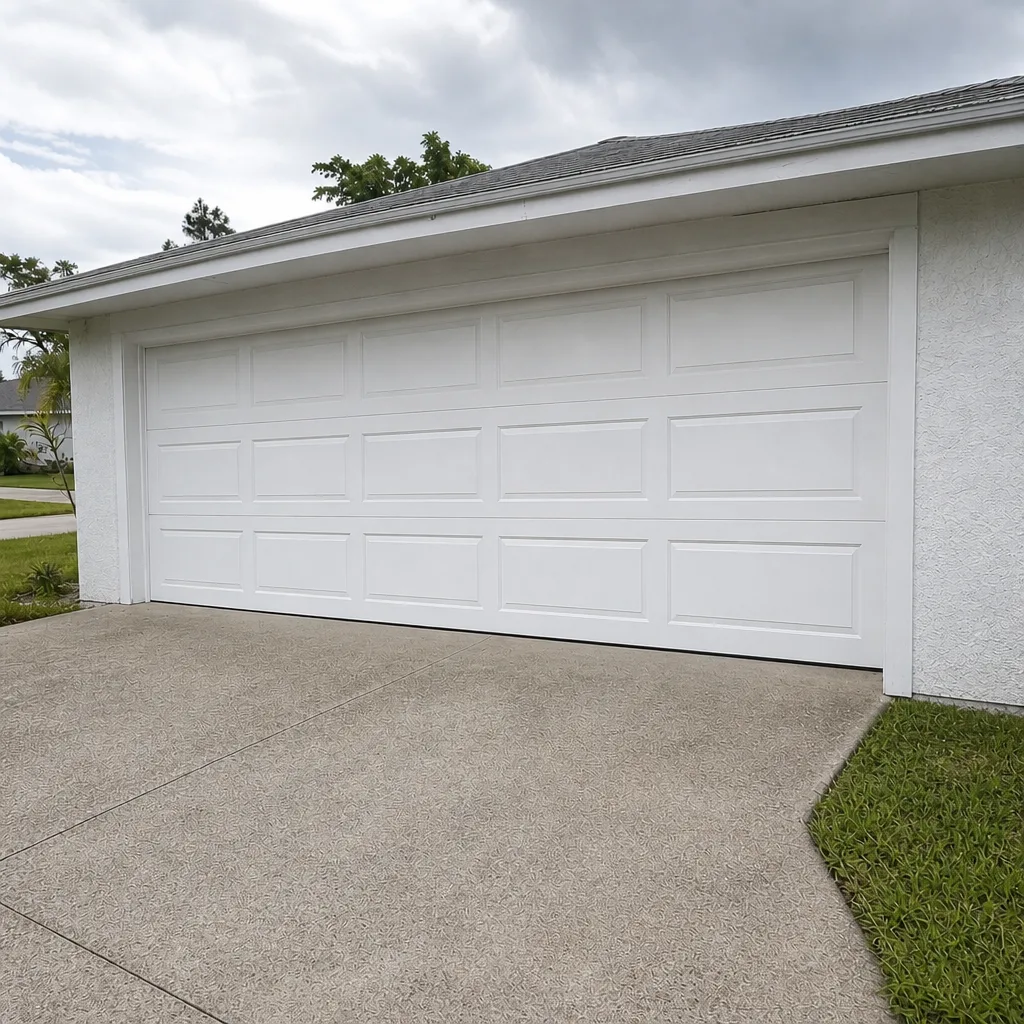 After
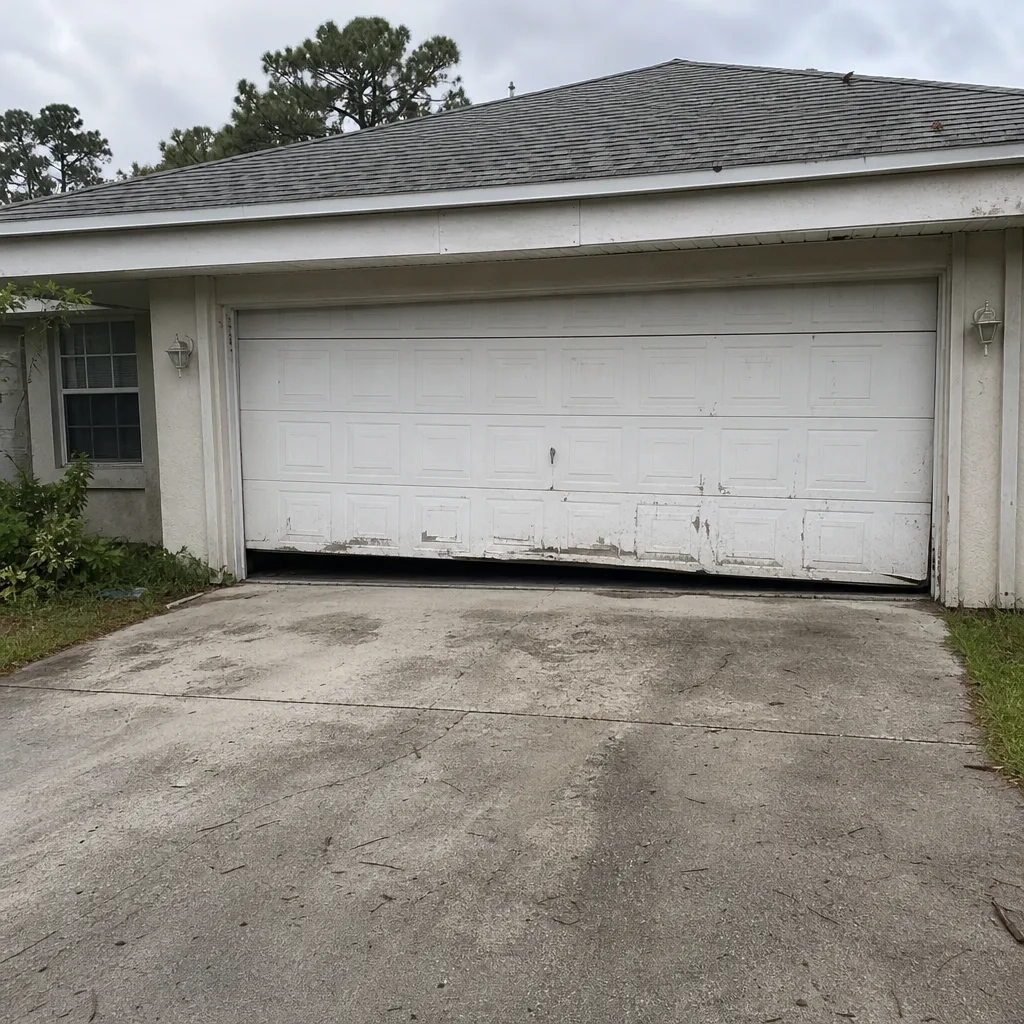 Before
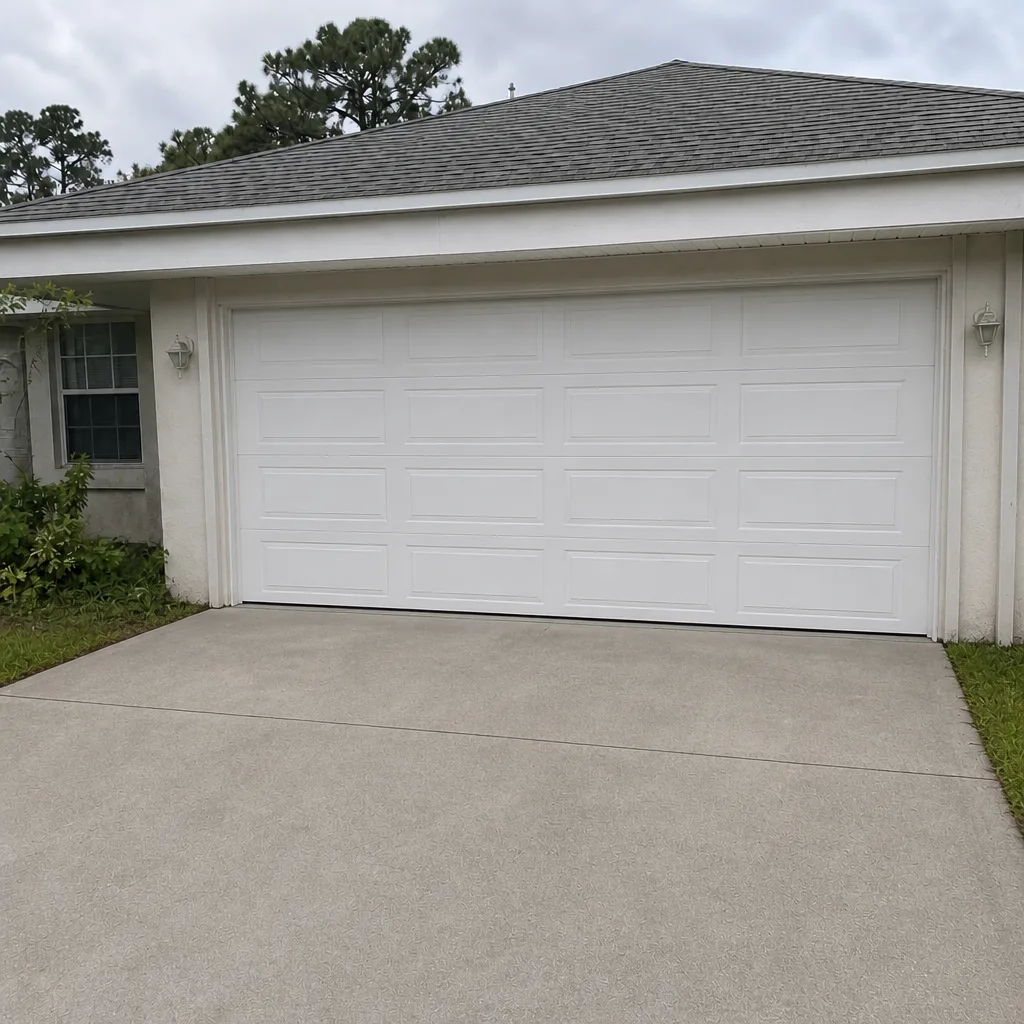 After
When to Call a Professional
There are situations where a garage door problem is a repair and you can reasonably do nothing beyond booking the service. A snapped spring, a door that’s binding in the track, an opener that’s stopped responding to the remote: those are Lehigh Acres garage door repair calls, and they don’t involve a permit or an inspection. There are also situations where the honest answer is that you need a specialist who understands the code side of the job. A door old enough to be facing replacement, a home sale coming up, an insurance claim after a storm, or a contractor’s quote that doesn’t mention the permit: those are reasons to get a professional assessment before signing anything. Garage door springs and cables are under real tension and can cause serious injury when handled incorrectly, so even a repair that seems simple is better left to a trained technician. Pilgrim Garage Door Repair offers free estimates in Lehigh Acres. Call (844) 522-0595. We answer 24/7.
Frequently Asked Questions
Yes. A full garage door replacement in Lehigh Acres requires a building permit through Lee County, and the replacement door must meet the current Florida Building Code wind-load requirement for your address. Routine repairs like spring, cable, or roller replacement generally don’t require a permit. When in doubt, confirm with Lee County’s building department before work begins. Call (844) 522-0595 for a free estimate that includes the permit process.
You can look it up. Lee County keeps permit records by address, so a search on the county’s permitting portal using your property address will show whether a permit was issued and whether a final inspection passed. If there’s no record, the county can tell you what the process is for getting a retroactive permit. Call (844) 522-0595 if you’d like help reading the history or understanding what it means for a sale or a claim.
Wind-load rating measures how much pressure a door can withstand without structural failure; impact rating measures how it performs when struck by flying debris. They’re separate characteristics. Most residential garage door replacements in Lehigh Acres are permitted and inspected on wind-load rating, and whether an impact-rated door is required or worth choosing depends on your home, your insurer, and the door’s role in the building’s overall protection. Call (844) 522-0595 to talk through which requirement applies to your address.
The permit stays open until the issue is corrected and the job passes re-inspection. Common reasons a job fails include a door that doesn’t match the permit specification, missing product documentation, incorrect fasteners, or omitted track reinforcement. The contractor is expected to correct the issue and schedule the re-inspection. If you’re dealing with a failed inspection from a prior contractor, call (844) 522-0595 and we’ll walk you through the options.
Usually not. An opener replacement doesn’t change the door’s wind-load rating, so it typically doesn’t require a building permit, whether the opener is a LiftMaster, Chamberlain, Genie, or another brand. If the opener is being replaced as part of a larger door replacement project, the door side of the job should be permitted. Call (844) 522-0595 if you’re unsure which category your project falls into.
Much of the housing stock in Lehigh Acres was built during the 2000s construction boom, and the original builder-grade doors on those homes are now reaching the age and condition where replacement makes sense. A replacement door has to meet the code in force today, not the code from when the house was built. That gap is why so many replacements involve a permit and an inspection that the original installation never did. Call (844) 522-0595 for a free estimate and we’ll confirm what your address requires.
The Bottom Line
In Lehigh Acres, a garage door replacement is a permitted, inspected, code-regulated job, and the paperwork matters as much as the door. The permit must be pulled in your name. The door must carry a documented wind-load rating that meets the current Florida Building Code for your address. The job must pass a final inspection before it’s considered complete. Impact rating and wind-load rating are not the same thing, and the distinction matters for both the county and your insurer. Skip any of these steps and the consequences show up at claim time or at resale, long after the installer has moved on to the next job. If you’re comparing quotes or you’re not sure whether your current door was permitted, garage door opener repair and door repair are a good place to start the conversation, and a free estimate will tell you whether a repair is enough or a replacement is in order.
Get the paperwork right and the door right at the same time. Pilgrim Garage Door Repair offers free estimates in Lehigh Acres. Call (844) 522-0595. We answer 24/7. Fast dispatch from 7am to 7pm, Sunday through Friday.
Written by the team at Pilgrim Garage Door Repair.