
Last updated November 15, 2026
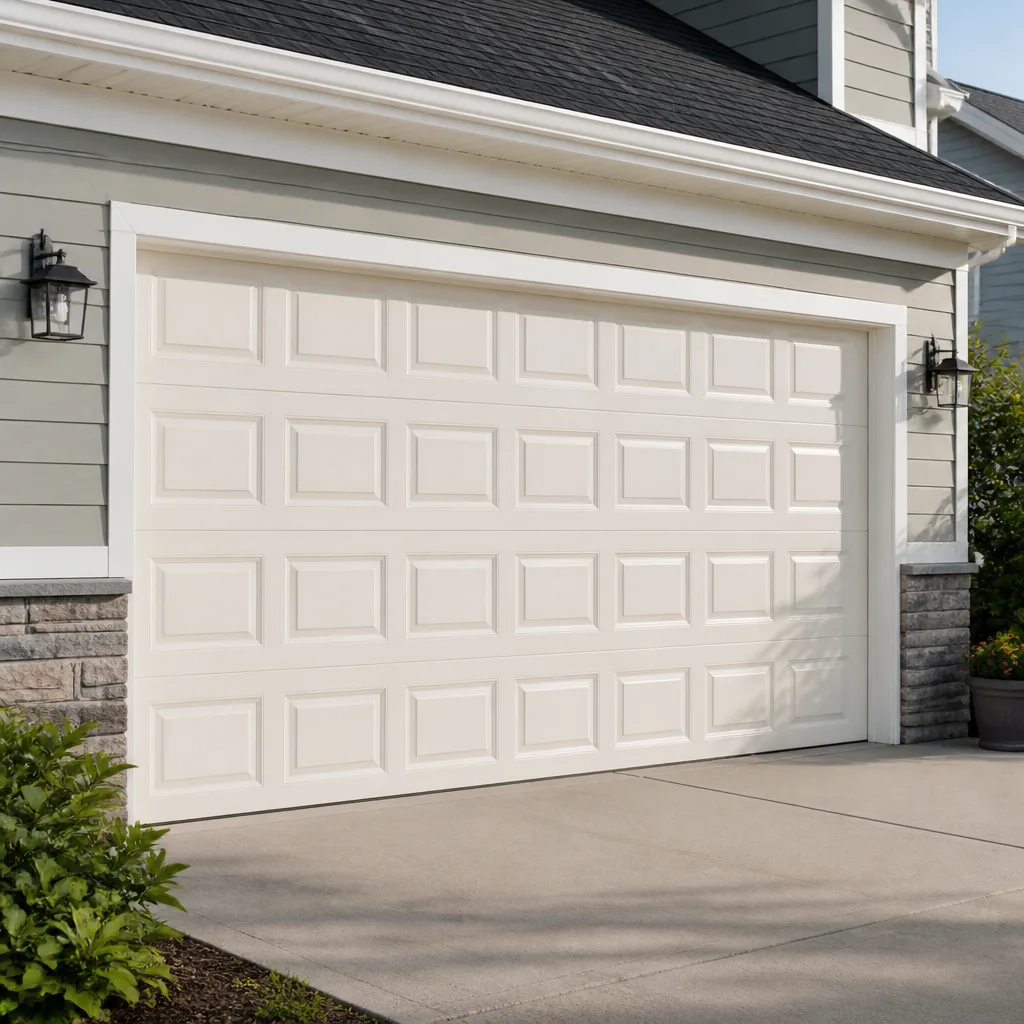 Raised-panel steel
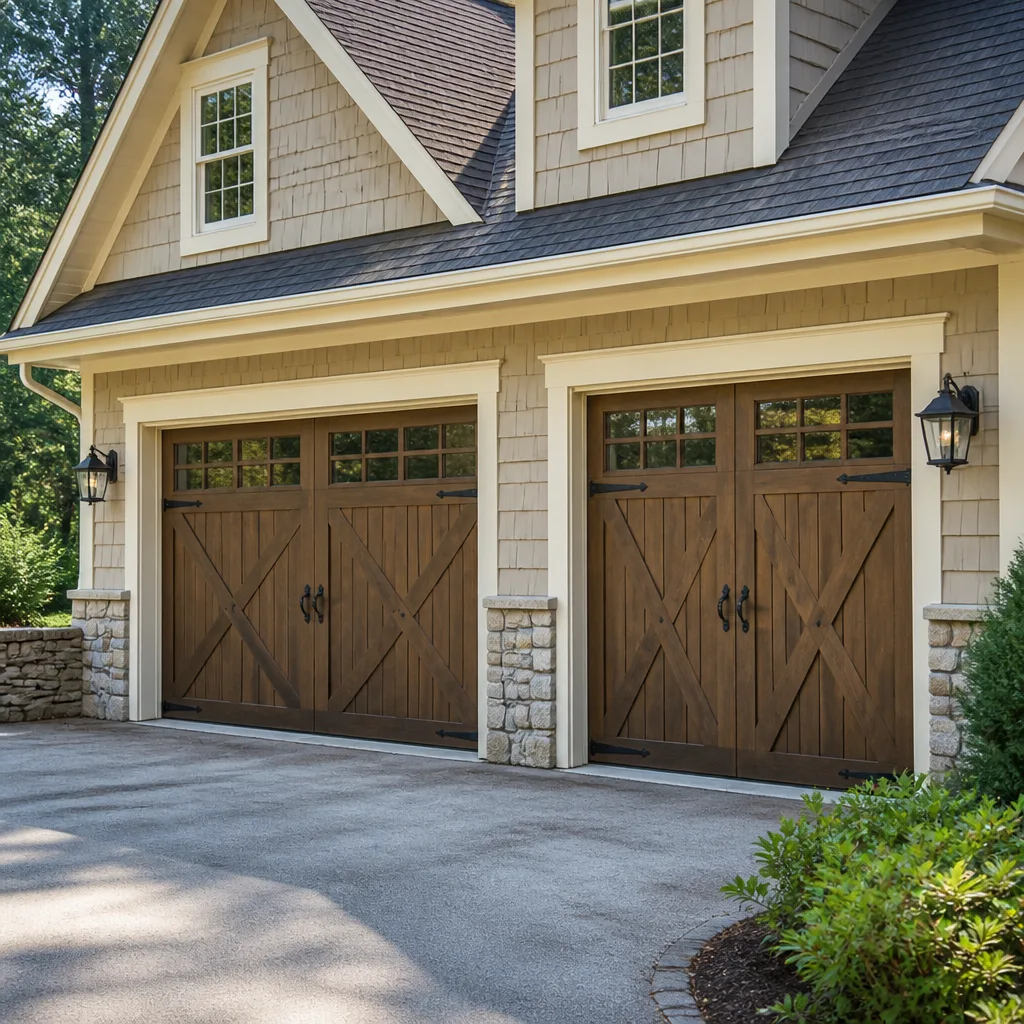 Carriage house
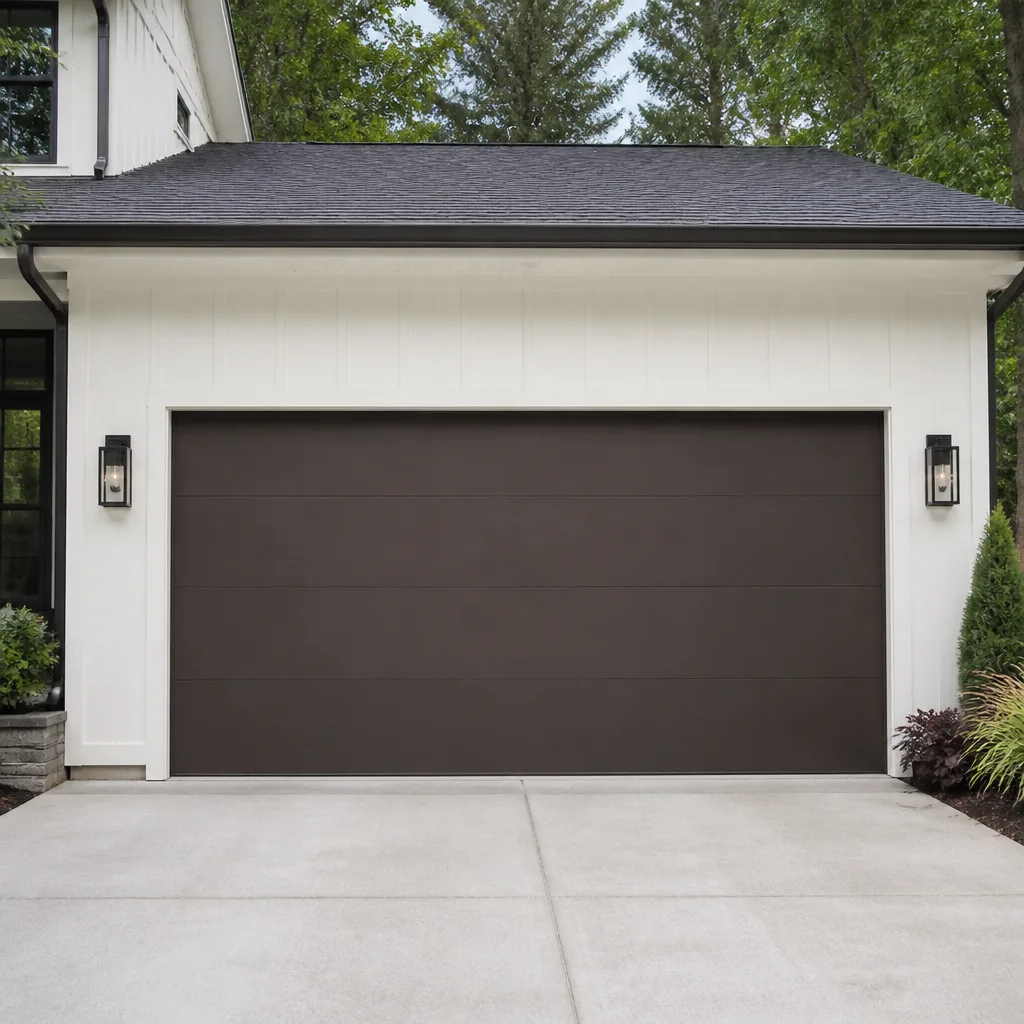 Modern flush
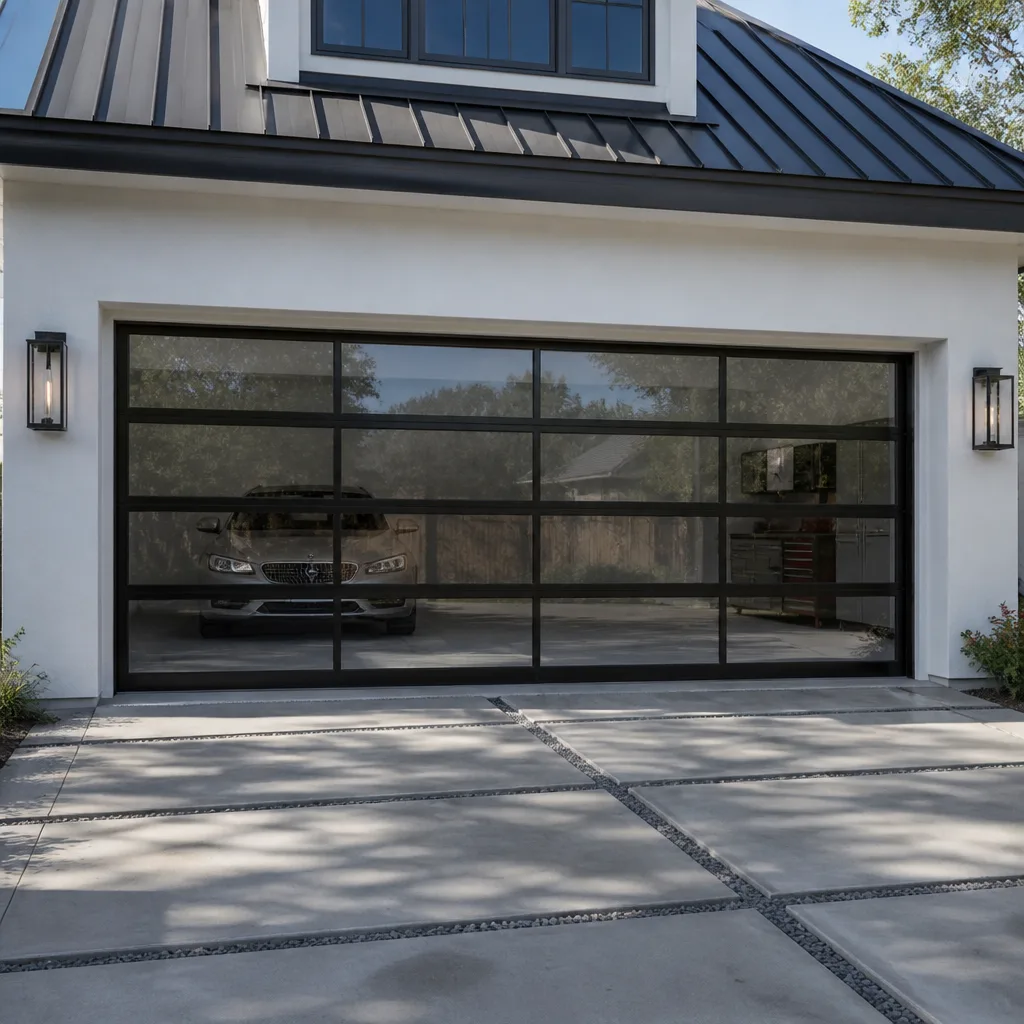 Full-view glass
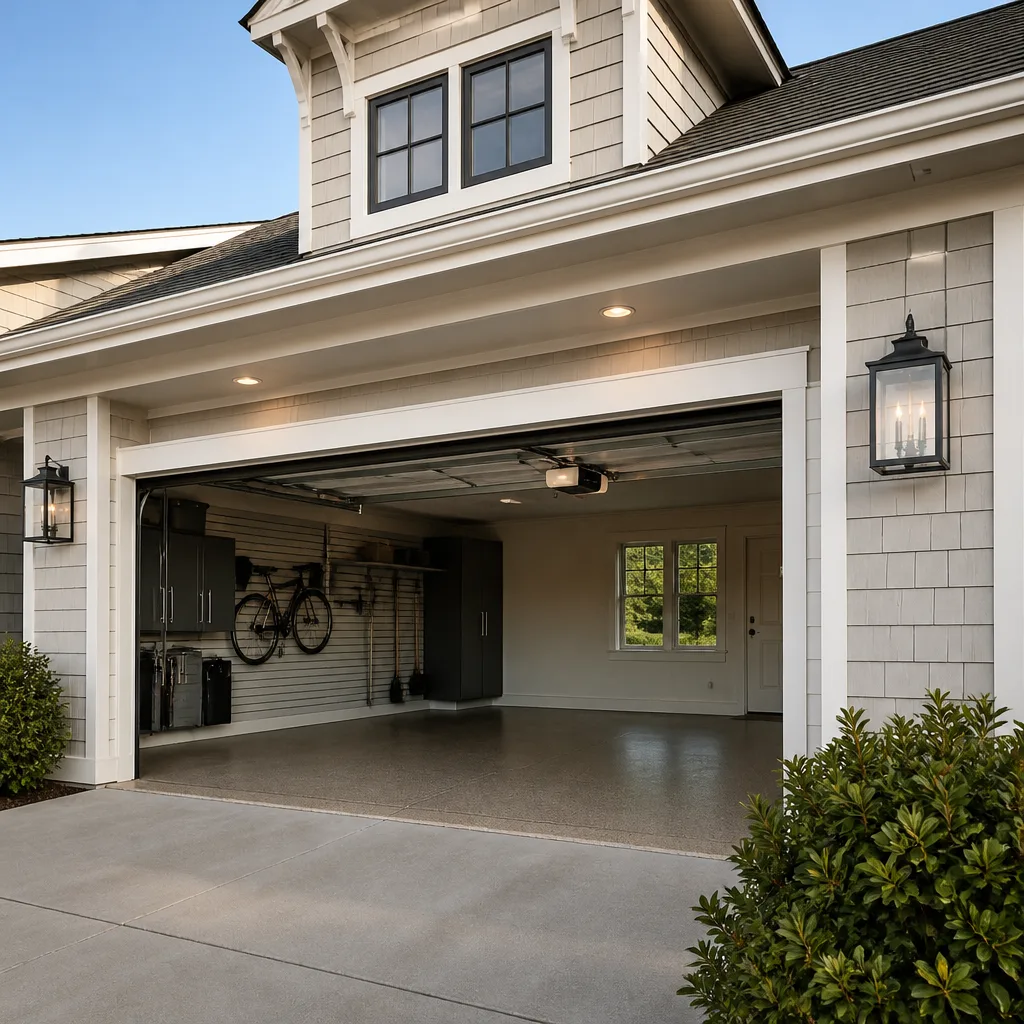 LiftMaster openers
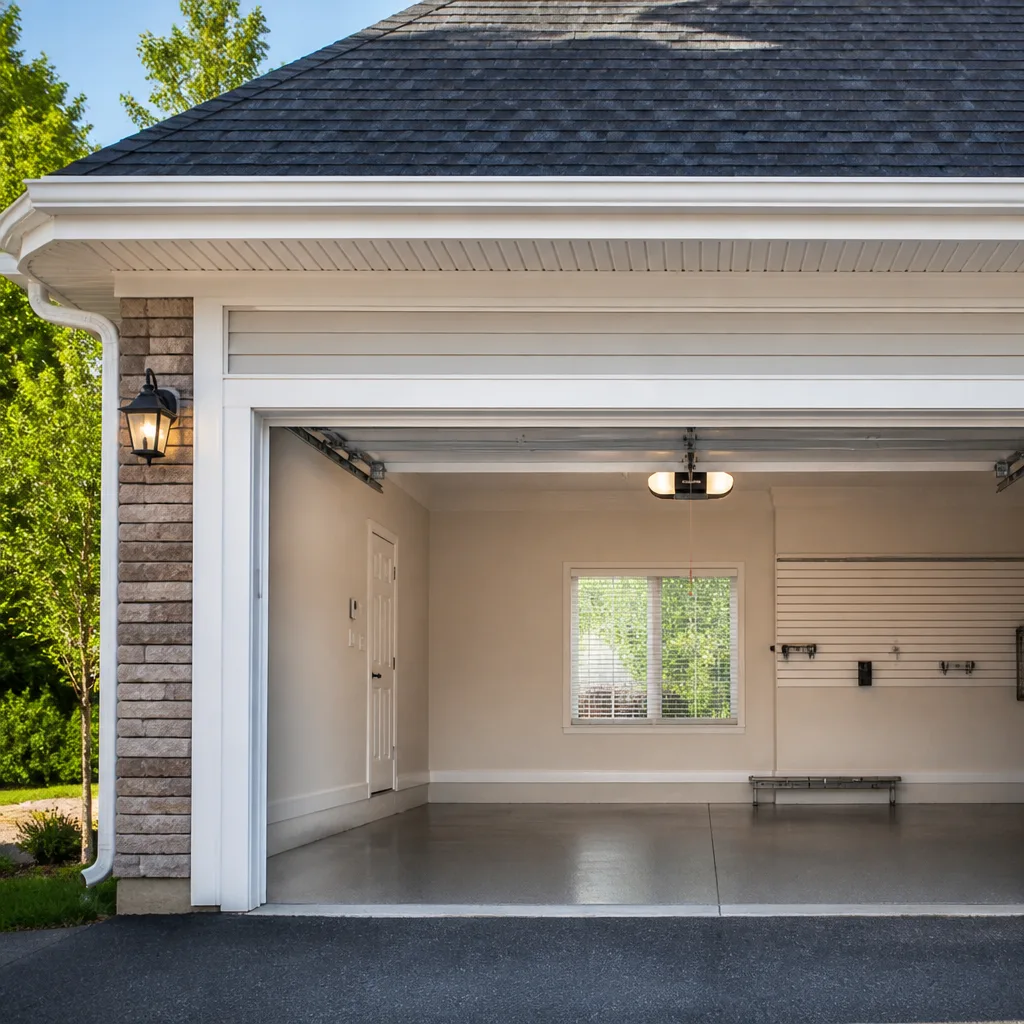 Chamberlain openers
Full 25-point door and opener safety check with every visit - springs, cables, rollers, tracks, and your LiftMaster or Chamberlain opener included
You get a price before we start. It does not change when the pro arrives.
Get your free estimateThe Complete Guide to Garage Doors in Lehigh Acres
Most garage door guides are written for climates with four seasons. Lehigh Acres has two: hot-wet and hot-dry. Your door hardware doesn’t care about the advice written for Ohio. A spring that lasts years in a dry, mild climate can fatigue faster in a place where the air is heavy with moisture for months at a time, and the slab under your door moves in ways a basement foundation never does. This guide treats the local environment as the central variable, not an afterthought. You’ll learn how humidity, heat, foundation type, and the brands already in your neighborhood shape what breaks, what lasts, and how to read your whole door system as one machine instead of a pile of parts.
Quick Answer
Garage doors in Lehigh Acres wear differently than in most of the country because sustained humidity and heat stress the springs, cables, and finish faster, while the area’s slab-on-grade construction changes how doors align. A door that lasts here is one built from the right materials, sealed properly, and serviced on a schedule that matches the local climate rather than a national one-size-fits-all timeline. The single most useful habit is reading your opener, springs, tracks, and seals as an integrated system, because in this climate a small failure in one part quickly spreads to the others.
Styles & brands we work with
- Raised-panel steel
- Carriage house
- Modern flush
- Full-view glass
- LiftMaster openers
- Chamberlain openers
Table of Contents
- How Lehigh Acres Climate Affects Your Garage Door
- Why Slab-on-Grade Foundations Change Door Alignment
- Which Panel Materials Hold Up in Lee County
- Reading Your Door as One Integrated System
- What’s Installed in Lehigh Acres Neighborhoods
- What Garage Door Work Typically Costs in Lehigh Acres
- A Maintenance Schedule That Fits the Local Climate
- Repair or Replace? A Decision Framework
How Lehigh Acres Climate Affects Your Garage Door
The humidity here does two things national garage door guides rarely address well. First, it accelerates spring fatigue. Torsion and extension springs are under constant tension, and the daily expansion and contraction that comes with a hot-wet to hot-dry swing adds micro-cycles on top of ordinary use. Second, moisture attacks cables and the steel parts that aren’t well coated. A galvanized cable that stays dry for most of its life in a drier climate lives longer than the same cable bathed in humid air that condenses on it every evening. In our experience working on doors across the region, those two failures account for a large share of the spring and cable replacements we see.
The practical result: the “lifespan” number you read online for a given spring or cable is a national average, and it tends to run optimistic for Lehigh Acres. A well-made spring that might last many years in a mild climate can cycle out faster under steady heat and moisture. That doesn’t mean you should replace parts early. It means you should check them on a schedule that matches the climate instead of waiting for a failure.
Heat also stresses everything that isn’t metal. Rubber bottom seals dry out and go brittle, which then lets water and pests under the door. Vinyl weatherstripping stiffens. The lubricant on rollers and hinges thins faster under heat, so friction climbs. When you keep the seals and lubrication up, the metal parts get a longer run. When you don’t, a 15-dollar seal failure turns into a rusted track and a misaligned door.
Why Slab-on-Grade Foundations Change Door Alignment
Most homes in Lehigh Acres sit on slab-on-grade foundations rather than basements or crawl spaces. That single fact changes garage door behavior in ways that matter. A slab is in direct contact with the ground, and the soils here shift with wet and dry seasons. Slabs move a little. When the slab under the garage opening moves, the door’s frame moves with it, and a door that was perfectly aligned in the dry season can start to bind or gap in the wet one.
Here’s how that plays out in practice:
- Tracks twist out of plumb. As the slab settles unevenly, the vertical tracks lose their true line. The door then rubs or leaves a gap on one side.
- Bottom seals lift. A slightly humped or dipped slab at the threshold means the seal no longer meets the floor evenly, which lets water and insects in.
- Hinges and rollers wear unevenly. A door operating slightly out of square loads one side harder than the other, so you see wear on one set of rollers long before the other.
Homes with basements or crawl spaces have a different set of movement problems, and advice written for them often tells owners to look for foundation-level causes a slab home doesn’t have. If your door is binding or gapping, the thing to check first is whether the tracks are plumb and the door is square, not whether your foundation has a problem a contractor would need to fix. Most of the time it’s an alignment adjustment, not a structural emergency.
Which Panel Materials Hold Up in Lee County
Material choice matters more here than in a mild climate. The two you’re most likely to weigh are steel and aluminum, with some wood and composite in the mix on higher-end homes. Steel is the workhorse for most residential doors, and how it’s made matters more than the label. A 24-gauge steel door stands up to heat and humidity better than a thinner 27-gauge panel, which dents and dings more easily over time. The gauge number runs backwards: lower is thicker and stronger.
Insulation type drives how a door feels and how long the finish lasts. Three common options:
- Polystyrene (beadboard) insulation: the budget choice. It resists moisture reasonably well, but it’s less rigid and less thermally effective than the alternatives.
- Polyurethane foam: denser, stiffer, and better at holding panel shape under heat. It also gives a warmer buffer against the sun baking the interior of your garage.
- No insulation: common on builder-grade doors. It’s fine for a detached workshop, but on an attached garage that fights the Florida sun, an uninsulated door lets a lot of heat transfer through.
The finish is where humidity does its slow work. Factory-applied finishes with a proper primer and topcoat resist moisture far better than field-painted steel. If your door is painted wood or an older steel door with a worn finish, watch for bubbling or rust at the bottom edge first, because that’s where moisture collects. Steel gauge, foam type, and finish together matter more than the brand name on the panel, though brand does tell you something about the build standard.
Reading Your Door as One Integrated System
A garage door looks like a single object, but it’s really a system of parts that depend on each other. When one part wears, the others take the load, and in this climate that chain reaction happens quickly. Reading the system means understanding how the opener, springs, tracks, rollers, hinges, and seals each feed into the whole.
Start with the opener. It’s not doing the lifting. The springs counterbalance the door’s weight, and the opener just moves a balanced door along its path. When a spring weakens, the opener starts straining against extra weight. That stress shows up as an opener that runs hot, a motor that sounds labored, or a door that reverses or stalls halfway. If your opener is suddenly struggling, the problem is often in the springs, not the motor. Treating the opener as the culprit and replacing it just means a new opener now strains against the same weak springs. For dedicated diagnostics, garage door opener repair starts with the balance of the door itself.
Then the mechanical chain. Springs lift. Cables connect springs to the bottom of the door through pulleys. Tracks guide the rollers, and the hinges let panels fold. Seals keep weather out. A stiff roller makes the door drag, which loads the opener, which loads the springs. A torn seal lets moisture in, which rusts the bottom bracket, which fails the cable. Every failure has an upstream cause worth finding before the part is swapped.
- Check the springs for gaps or a stretched look.
- Look at the cables for fraying or rust.
- Check the tracks for dents or a loss of plumb.
- Test the balance with the opener disengaged.
- Inspect the bottom seal and weatherstripping.
That order matters: springs are the highest-stress parts, so they get checked first. If you’re not comfortable with this level of assessment, garage door repair is the service that treats the whole system rather than swapping one piece.
What’s Installed in Lehigh Acres Neighborhoods
Most door systems in Lehigh Acres fall into a handful of brand families, and each has its own service history. Understanding what’s common in your neighborhood helps you know what kind of work the door likely needs. This is a brand-agnostic read of what we routinely see, not a ranking.
Builder-grade systems. Across many of the residential neighborhoods here, the doors that came with the home are often Wayne Dalton or Craftsman units. Wayne Dalton doors are common on new construction, and their service history tends to center on spring replacements, roller wear, and panel damage from the sun and humidity. Craftsman openers are everywhere because that’s what builders installed for years. They’re reliable, and the parts are widely available, but older models benefit from belt or chain checks.
Premium architectural doors. On higher-end homes, Clopay and Amarr doors are the most common, and both lines cover a range of materials and styles. Service histories for these tend to focus on finish upkeep and hardware, since the panels themselves hold up well when the seals and lubrication are maintained.
Openers. LiftMaster, Chamberlain, and Genie are the everyday names, and Genie’s Aladdin Connect is a common smart-home option on newer systems. Chamberlain and LiftMaster are common across Florida neighborhoods, and both run on the same underlying platforms as their smart-home lines. When an opener starts acting up, the brand tells us what to expect about the electronics.
None of that means the brand guarantees how your door will age. Two homes with the same door can have very different lives if one owner maintains the seals and lubrication and the other waits for failures. The brand sets the starting point; the climate and the maintenance set the trajectory.
What Garage Door Work Typically Costs in Lehigh Acres
Garage door pricing here is set per job by a written estimate, and the ranges below are typical local estimates, not fixed prices. The written quote you receive is the price, and you’ll know it before any work starts. Replacing one spring is priced per spring. A matched pair is usually replaced together, so a pair costs roughly double.
| Job | Typical Estimated Range |
|---|---|
| Spring replacement (one spring) | Quoted per spring on the written estimate |
| Matched spring pair | About double the single-spring figure |
| Cable replacement | Quoted per cable on the written estimate |
| Roller and hinge tune-up | Quoted by the number of rollers and hinges |
| Opener repair | Quoted by the opener model and fault |
| Track realignment | Quoted per job |
| New door installation | Quoted per door after measuring and ordering |
The important things to ask for in any quote: the part number and brand of the replacement, whether a matched pair is needed, and whether the price covers disposal of old parts. On a spring job, ask whether the technician will check the door’s balance after replacement. On a cable job, ask whether they’ll inspect the bottom bracket, which is the most common failure point. On a replacement, ask for the door’s gauge and insulation type before you commit.
The one pricing question every customer asks is whether the number can grow once the technician is on the job. Here the answer is clear: we quote and agree the price with you before any work starts, so there’s no surprise invoice later. If the technician finds a problem the original estimate didn’t anticipate, you’ll hear about it and you’ll decide before anything else is touched. That’s not a sales prologue; that’s the price agreement.
A Maintenance Schedule That Fits the Local Climate
The right schedule here is a bit more frequent than national guides suggest, because the climate works on the hardware every month. Here’s a practical annual rhythm:
- Monthly: test the balance with the opener disengaged, and check the safety reverse. Run the door up and down and listen for new noises.
- Quarterly: inspect springs for gaps, cables for fraying, and the door’s moving parts for rust. Wipe tracks clean of grit.
- Every six months: lubricate rollers, hinges, and the torsion bar bearings with a lubricant suited to heat. Check the bottom seal for hardening and cracking.
- Annually: check the track alignment and plumb, look over weatherstripping, and tighten the mounting hardware that vibration loosens.
- Before and after the wet season: look for rust at the bottom of the door and around the brackets. Rusting brackets are where cable failures start.
That schedule is genuinely useful because it ties the work to what’s actually attacking the door in Lehigh Acres. Heat thins lubrication faster, so it needs refreshing on a shorter interval. Humidity attacks bare metal, so the checks that catch rust early are worth more than a generic “inspect annually” line. The schedule is the cheapest maintenance you’ll do, and it catches the failures before they cascade into replacing multiple parts.
Repair or Replace? A Decision Framework
Most Lehigh Acres homeowners end up facing this question sooner or later. Repair is usually the right call when a single failed part is the problem: a broken spring, a frayed cable, a stuck roller, or an opener that needs a component replaced. The door’s structure and the rest of the hardware is fine, and the failure is mechanical and isolated. That’s normal, and the repair is straightforward.
Replacement makes sense in a few cases:
- The door has repeated failures in different parts. A door where the springs, cables, and hinges keep going can often be replaced for close to the total repair cost over time.
- Panels are rusted or warped beyond repair. When the rust is through the panel, patching it just moves the problem.
- The door is a builder-grade unit that’s been neglected, and the finish is failing across the panels. Replacement with a properly finished, insulated door usually pays back in reduced maintenance.
- The opener is a legacy unit that has no parts supply and no smart-home compatibility. Replacing the whole system tends to cost less over time than patching it repeatedly.
None of that means you should replace on schedule. It means you should replace when the failure pattern points to it, not because the door is old. The only real judgment call is whether the door is failing on multiple fronts or one. If it’s one, repair. If it’s many, ask about replacement pricing before committing to a repair.
Common Mistakes to Avoid
- Replacing the opener when the springs are the problem. A struggling opener is usually a symptom, not a cause. Diagnose the door’s balance first, or you’ll replace a healthy motor.
- Ignoring the bottom seal. A dried seal lets in water and pests, and the moisture that collects at the bottom of the door rusts the brackets where cable failures start.
- Skipping lubrication in the heat. The oily parts dry out faster here, so an annual dab is not enough. Check them more often.
- Assuming a foundation problem when the tracks are out of plumb. On a slab home, alignment problems are usually mechanical. Check the tracks before you call a foundation contractor.
- Replacing one spring in a matched pair. If one has failed, the other is likely close. Replace both at once to avoid a second failure soon after.
- Choosing a door by panel color only. Gauge and insulation type matter far more for how long the door lasts and how the garage feels in summer.
- Paying for a replacement the climate model doesn’t support. A door that’s failing on one part needs repair. Don’t let one failure lead to a full replacement unless the whole system is exhausted.
See the difference
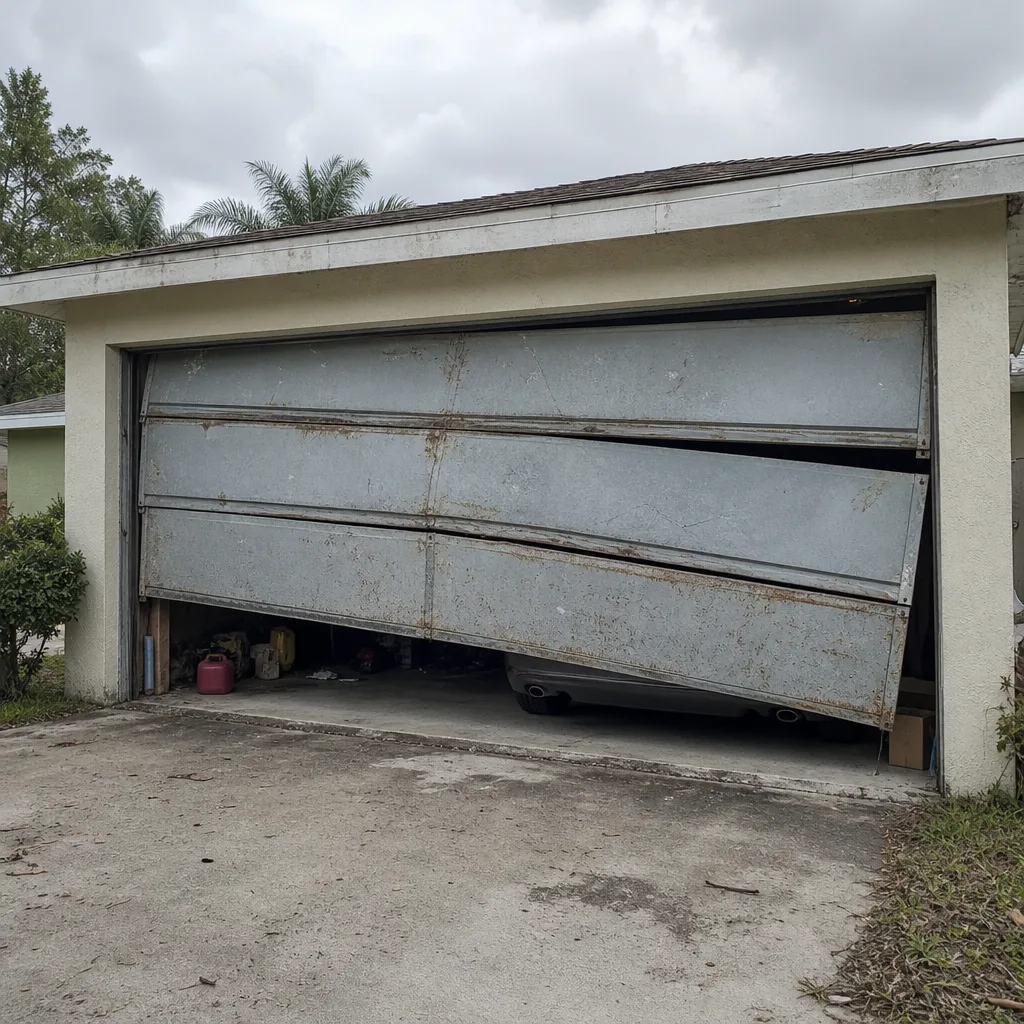 Before
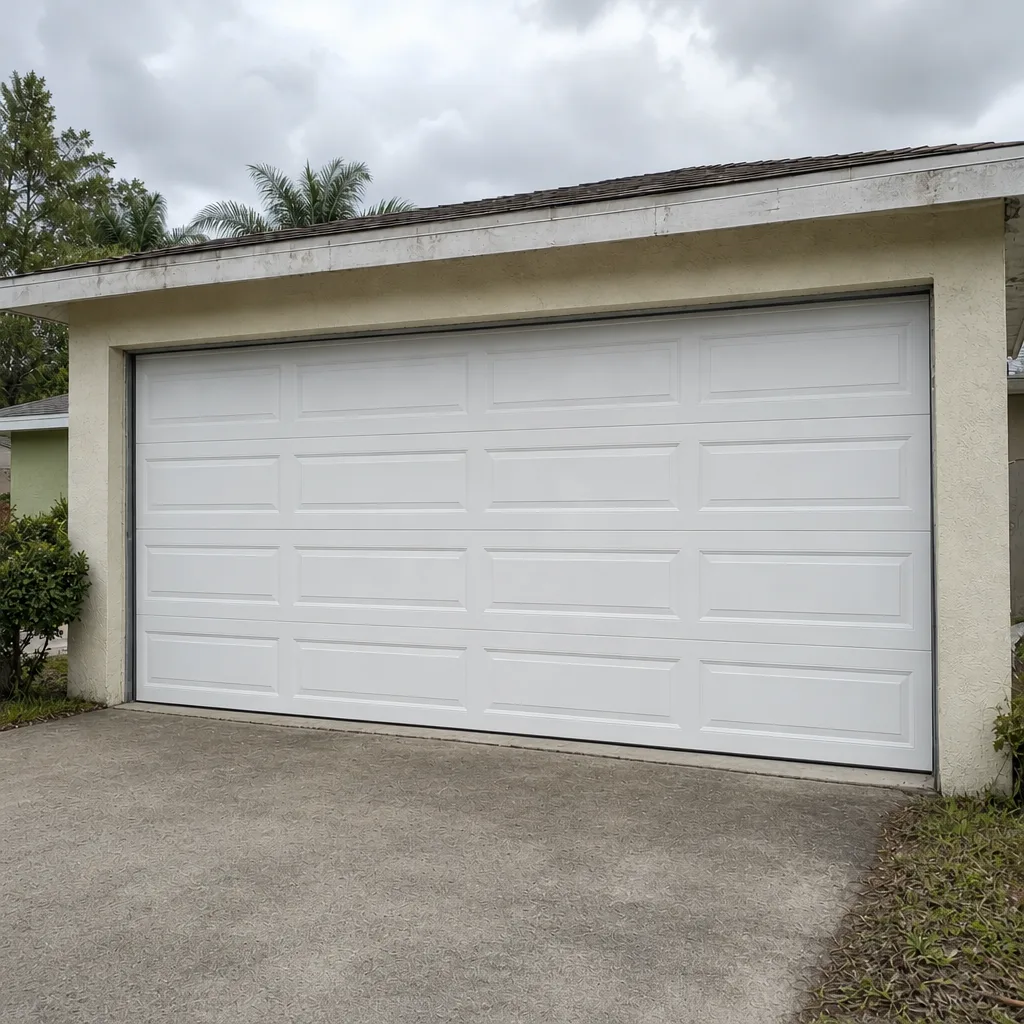 After
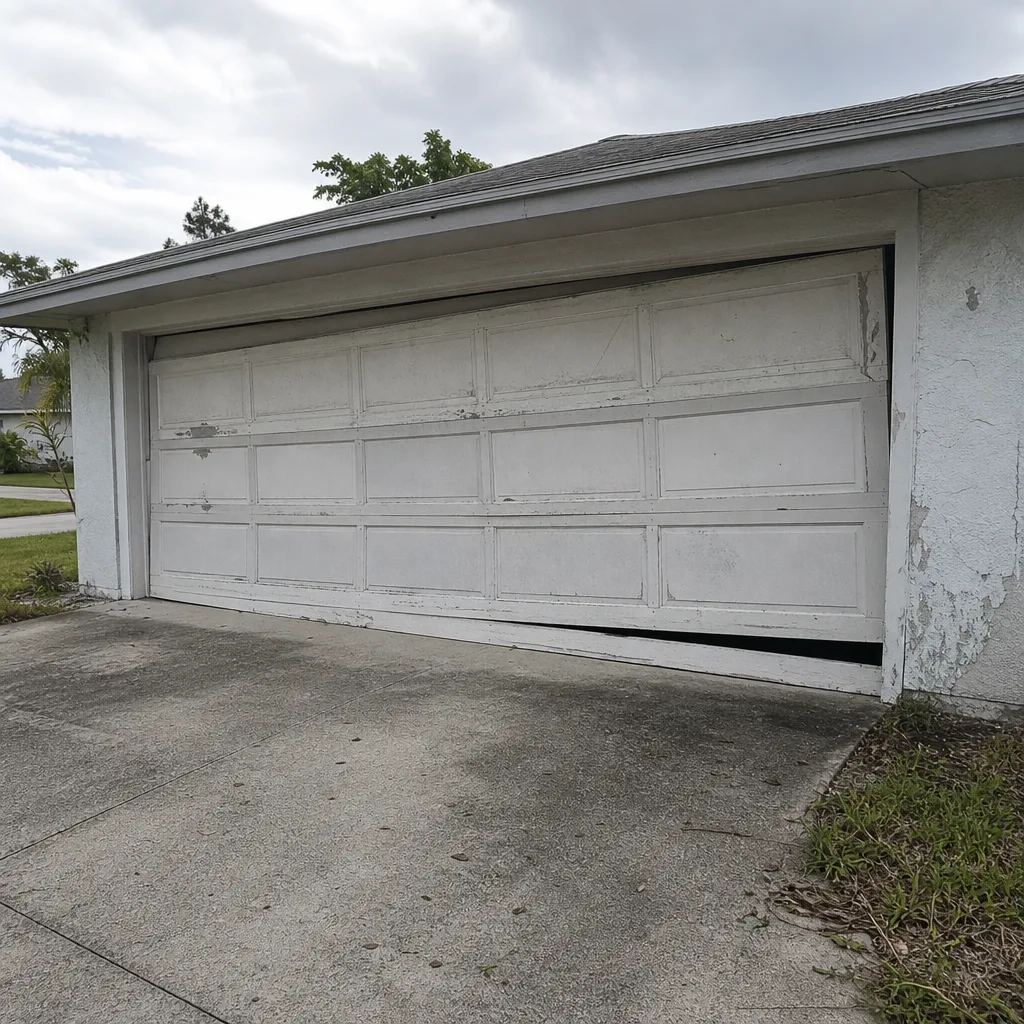 Before
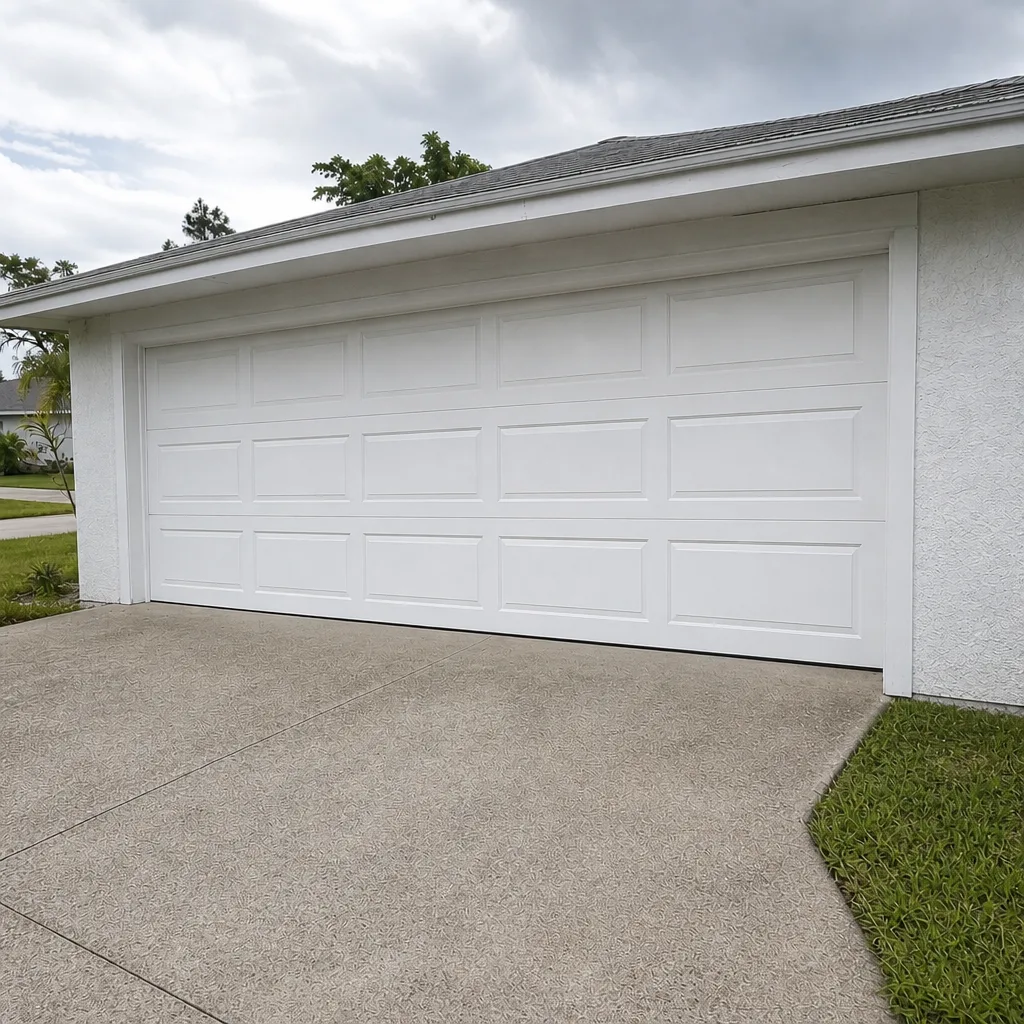 After
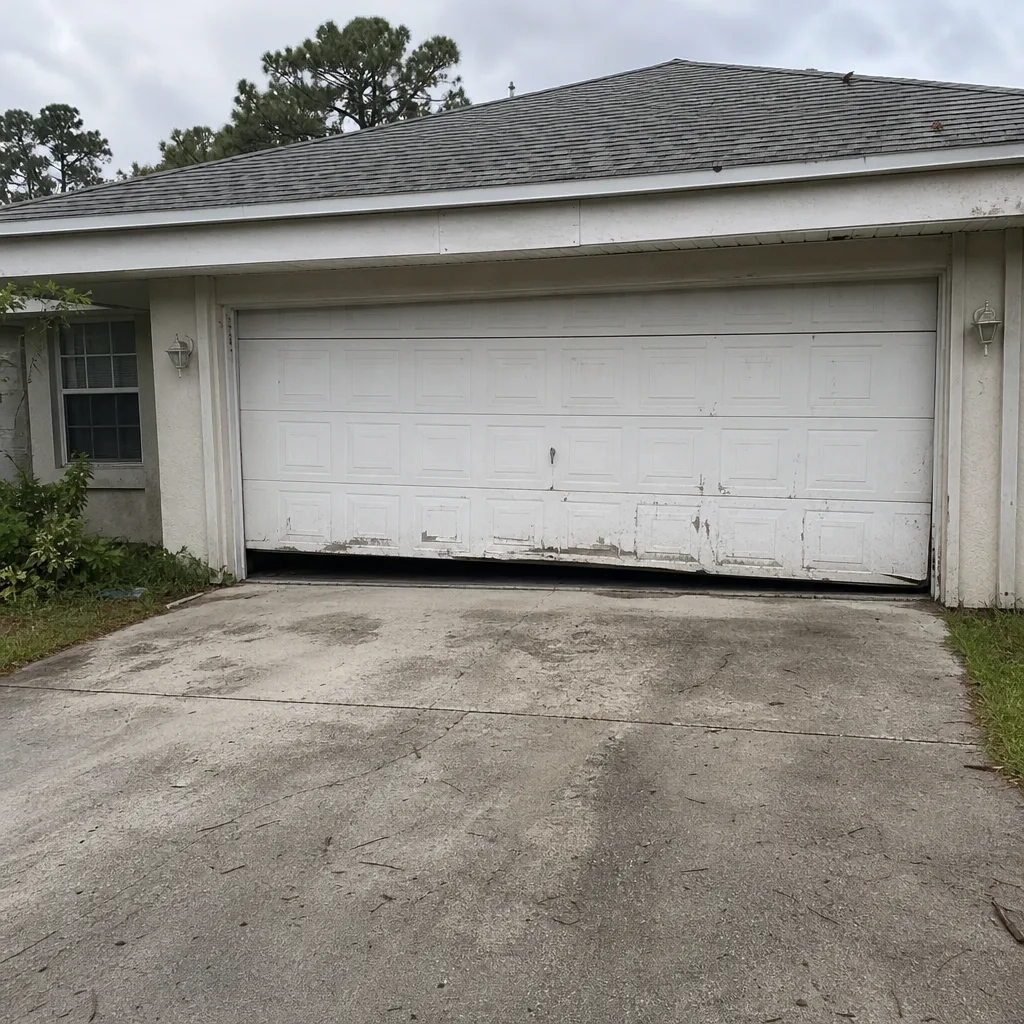 Before
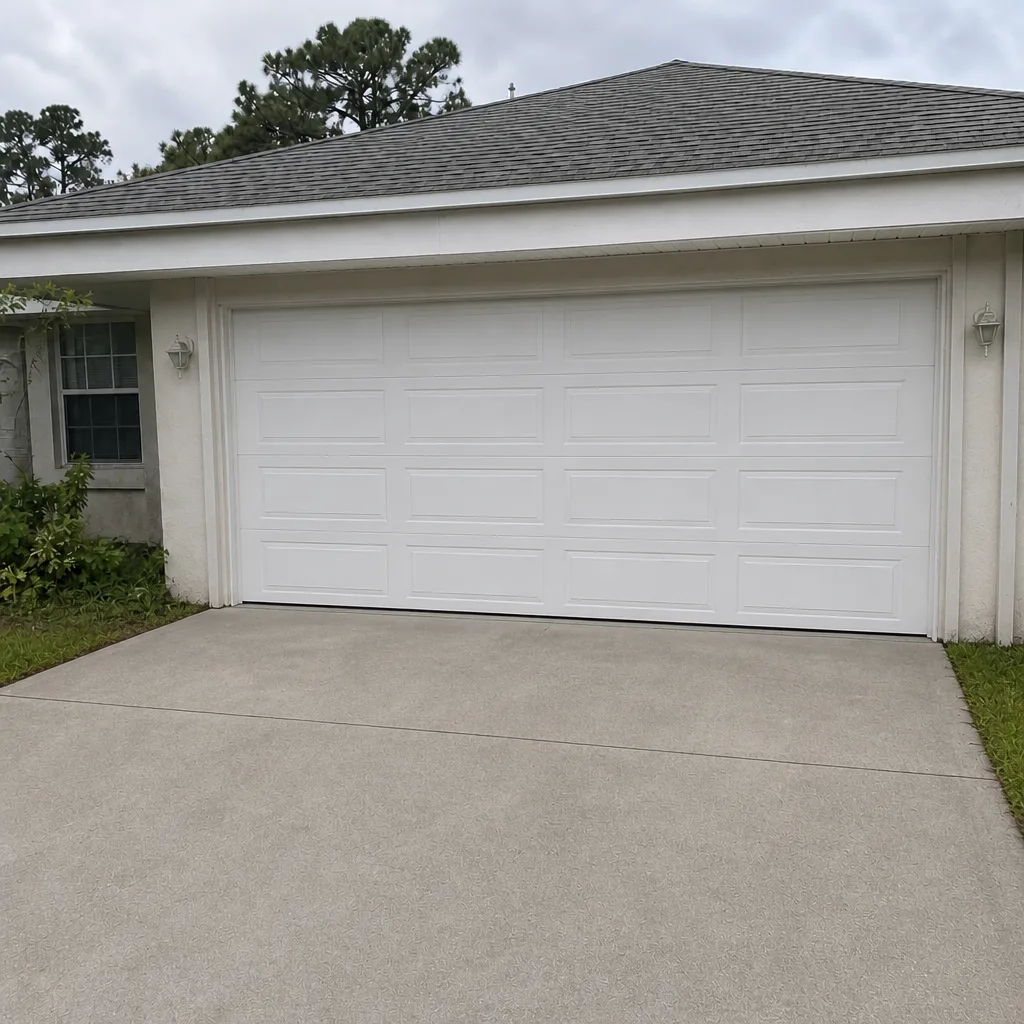 After
When to Call a Professional
Call a professional when a spring has broken, when a cable is frayed, or when the door won’t lift, reverse, or close safely. High-tension springs and cables are dangerous to work on, and a door in this state should not be forced. Call us if the opener runs but the door doesn’t move, if the door leaves a gap, if the tracks are visibly bent, or if the safety reverse has stopped working. Also call when you’re not sure what you’re looking at. A short conversation and an on-site assessment is faster than guessing. Pilgrim Garage Door Repair offers free estimates in Lehigh Acres. Call (844) 522-0595, or see where we work on our Lehigh Acres page.
Frequently Asked Questions
Springs in Lehigh Acres tend to wear faster than national averages because heat and humidity add cycles and corrosion on top of ordinary use. There’s no single timeline, but the right approach is to check them on the monthly balance test and replace a matched pair when one fails. Call (844) 522-0595 for an exact quote; estimates are free.
Slab-on-grade foundations common in Lehigh Acres move slightly as the soil shifts between wet and dry, and that movement changes the door’s alignment. Binding or gapping is usually a track plumb and square issue rather than a foundation problem. A professional realignment is the usual fix. We answer 24/7 at (844) 522-0595.
Thicker steel (24-gauge rather than 27-gauge) and polyurethane foam insulation hold up better in this climate than thin panels or uninsulated doors, and the factory finish matters most of all. A well-finished, properly sealed steel door lasts longer here than a wood or field-painted one. Call (844) 522-0595 for guidance on brands like Clopay or Amarr.
Spring replacement is often done same day, yes, and the technician’s first step is to confirm the diagnosis on arrival. We answer 24/7. Fast dispatch from 7am to 7pm, Sunday through Friday, closed Saturday. Call (844) 522-0595 for an exact quote.
The price is quoted and agreed before any work starts, so what you approve is what you pay. If the on-site inspection turns up something the original estimate didn’t anticipate, you’ll be told first and you’ll decide before anything else is touched. Call (844) 522-0595; estimates are free.
The technicians are experienced professionals, and the company connects homeowners with independent local professionals who perform the work. Our technicians have up to 15 years of experience. If you have a specific question about credentials before a visit, call (844) 522-0595 and we’ll answer it.
The Bottom Line
Garage doors in Lehigh Acres live a different life than the national average, and the advice written for four-season climates gets the local picture wrong. Heat stress and sustained humidity shorten spring and cable life. Slab-on-grade foundations move door alignment in ways a basement home doesn’t. Material choice, gauge, insulation, and finish all matter more here than the brand name on the panel. Read the door as one system, keep the seals and lubrication on a schedule that matches the climate, and repair when a single part fails. When it’s more than one part, ask about replacement. For a free estimate on any of it, call Pilgrim Garage Door Repair at (844) 522-0595. We answer 24/7. Fast dispatch from 7am to 7pm, Sunday through Friday, closed Saturday. Start at Pilgrim Garage Door Repair.
Written by the team at Pilgrim Garage Door Repair.